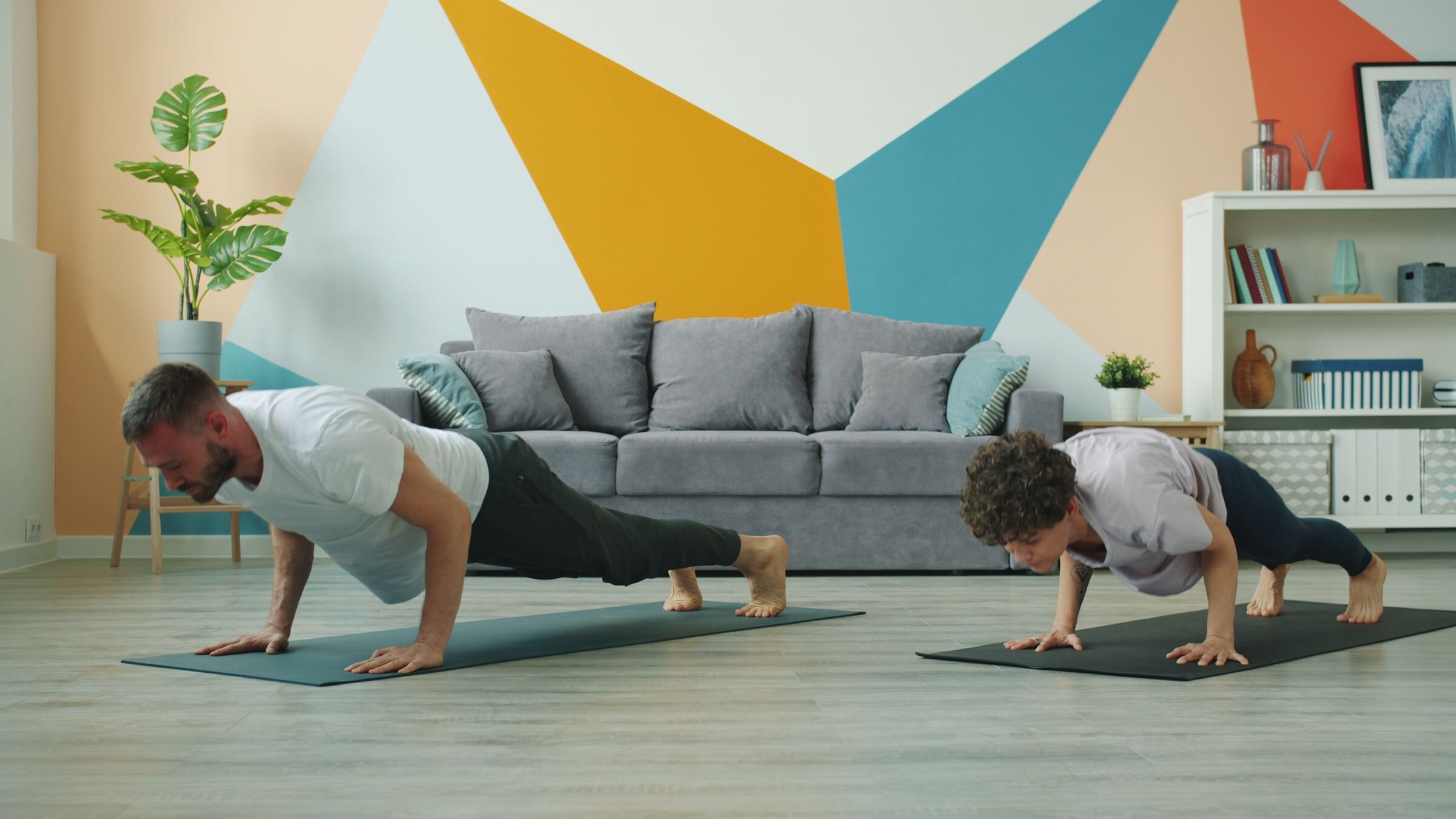
Crunches, sit-ups, planks until you shake: if ab exercises burned belly fat, most of us would have flat stomachs by now. The idea that you can burn fat from one area by working the muscle underneath is called spot reduction, and it is one of the most persistent myths in fitness.
Here is what the research actually shows, why belly fat matters for your health, and what to do instead. Core training still earns a place in your week; just not for the reason most people think.
Can you spot-reduce belly fat?
Researchers have tested this directly. In one randomized trial, 24 sedentary adults were split between an ab-training group, which did seven abdominal exercises, two sets of ten reps each, five days a week for six weeks, and a control group that didn't train. Everyone kept their calorie intake steady. Compared with the control group, the ab training made no significant difference to body weight, body fat percentage, abdominal fat, waist circumference or skinfold thickness over the stomach. What did change was their muscular endurance: they could do 47 curl-ups on average, compared with 32 in the control group.[1]
Another study took the idea to an extreme. Eleven young adults trained only one leg on the leg press, three times a week for 12 weeks, doing 960–1,200 light reps per session. They did lose fat, about 5% of their total fat mass. But the fat came off their arms and trunk, not the leg they had trained.[2]
The lesson: training builds the muscle, but the fat on top is drawn from wherever your body chooses. You can't pick the order.
Two kinds of belly fat
- Subcutaneous fat sits just under your skin. It's the part you can pinch.
- Visceral fat sits deeper, around your organs.
Where fat is stored matters. Visceral fat in particular is linked with the health problems of excess weight.[3] An international consensus statement goes as far as calling waist circumference a "vital sign": body mass index alone isn't enough to judge the risk that comes with extra body fat, and shrinking your waist is an important treatment target. The good news is that clinically meaningful reductions in waist size can come from regular, moderate-intensity exercise, diet, or both.[4]
How to measure your waist: stand and wrap a tape measure around your middle, just above your hipbones, and read it just after you breathe out. According to the US National Heart, Lung, and Blood Institute, a waist of more than 35 inches (about 88 cm) for women or more than 40 inches (about 102 cm) for men raises your risk of heart disease and type 2 diabetes.[5] Treat those cut-offs as a general guide; researchers are still refining them by age, sex and ethnicity.[4]
What actually works
1. Lose fat overall
Belly fat comes off as part of your total fat loss, which depends on a calorie deficit. Start with our guide to calorie deficits to set yours up.
2. Do regular cardio
Aerobic exercise has the strongest evidence for visceral fat. A meta-analysis of 35 randomized trials that measured visceral fat with CT or MRI scans found that aerobic exercise reduced it compared with no exercise, while resistance training alone didn't show a significant effect in that analysis. Even amounts of aerobic exercise below the usual weight-management recommendations appeared to help.[3]
3. Lift weights too
Newer evidence adds strength training to the list. A 2022 meta-analysis of more than 50 randomized trials found that resistance training, compared with no exercise, reduced body fat percentage, fat mass and visceral fat in healthy adults.[6] The practical answer is to do both. For how to balance them, read cardio vs. weights for fat loss.
4. Protect your sleep
In a five-year study of more than 1,100 African American and Hispanic American adults, people under 40 who slept five hours or less gained more abdominal fat, both under the skin and visceral, than those who slept six to seven hours. Sleeping eight hours or more was also linked with more gain, and there was no link in people over 40.[7] A study like this can't prove cause and effect, but it's one more reason to protect a regular night's sleep.
Core training: for strength and function, not fat loss
So why train your abs at all? Because a strong trunk helps you brace under heavy squats and deadlifts, carry heavy loads and control your posture, and, as the trial above showed, ab training does improve muscular endurance.[1] Good core training includes exercises that teach your trunk to resist unwanted movement, not just to curl.
Do the first circuit two or three times a week, at the end of a strength session or on a cardio day. It takes 10–15 minutes.
Core circuit for beginners
-
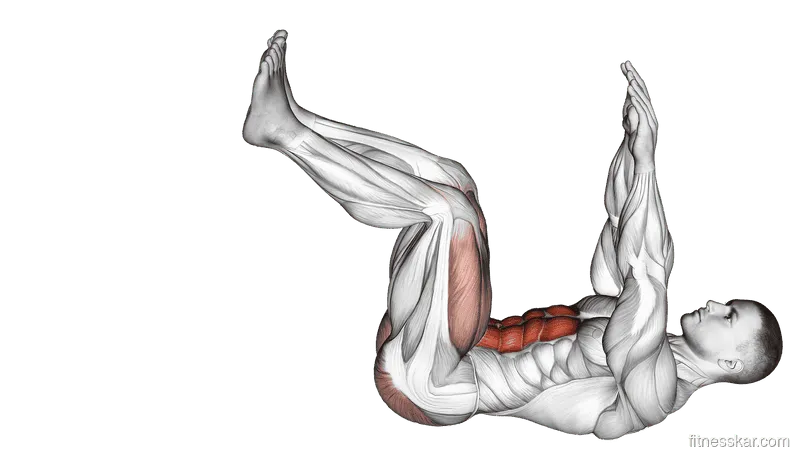
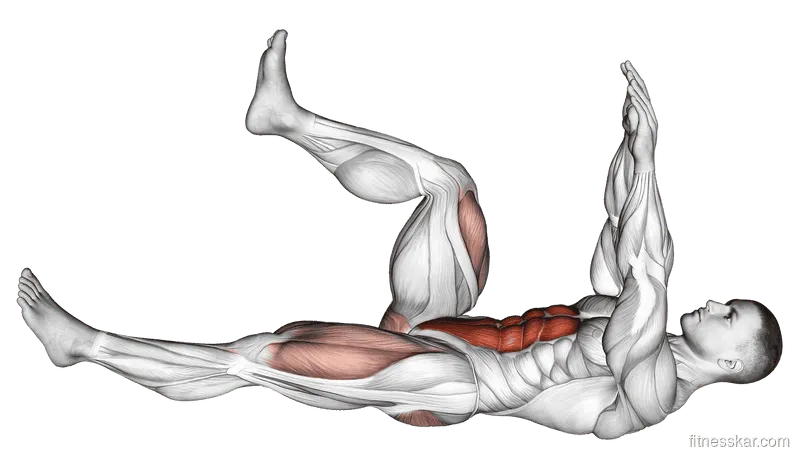
1 Dead Bug - Sets
- 3
- Reps
- 8–10
- Rest
- 45 s
-
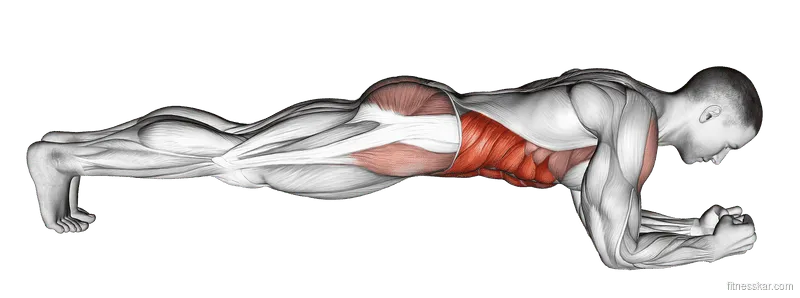
2 Front Plank - Sets
- 3
- Rest
- 45 s
- Duration
- 20–45 s
-
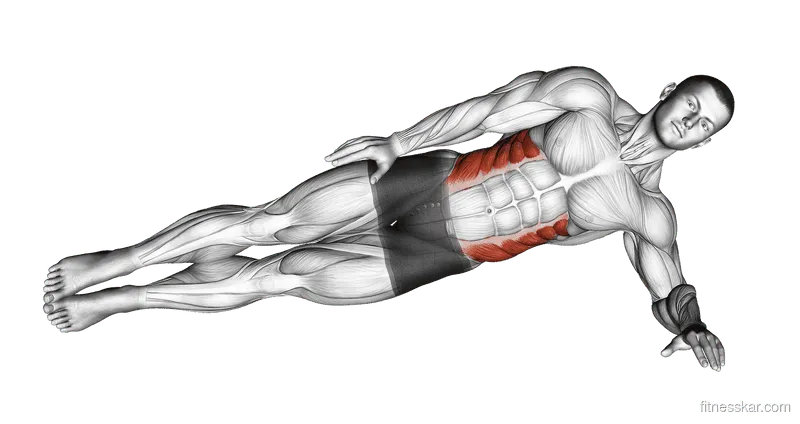
3 Side Plank - Sets
- 2–3
- Rest
- 45 s
- Duration
- 20–30 s
-
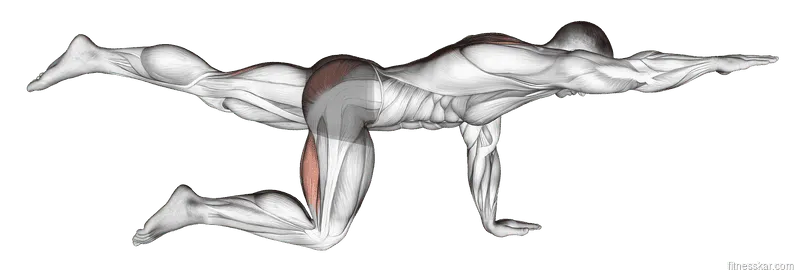
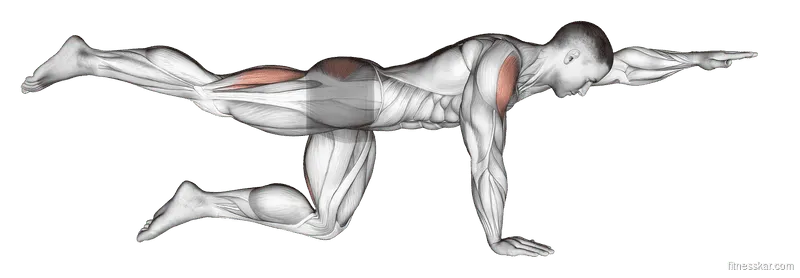
4 Bird Dog - Sets
- 2–3
- Reps
- 8–10
- Rest
- 45 s
When those feel easy, move on to harder variations:
Core progressions
-
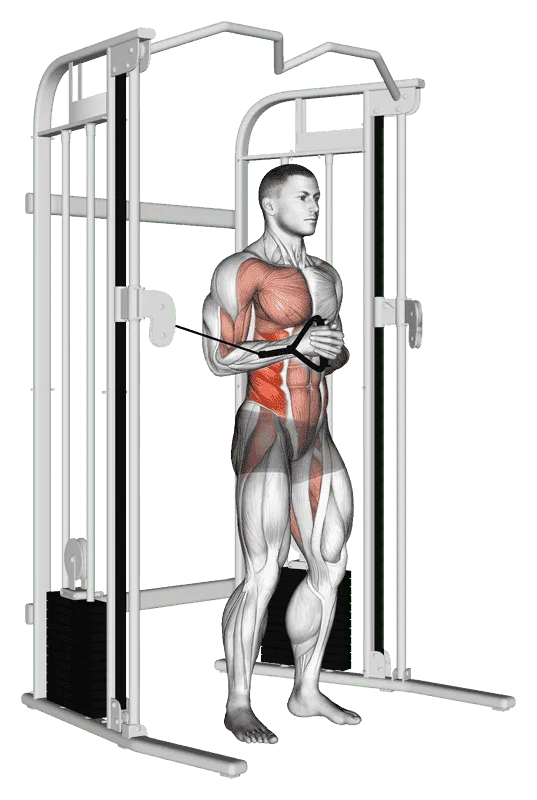
1 Cable Horizontal Pallof Press - Sets
- 3
- Reps
- 10–12
- Rest
- 60 s
-

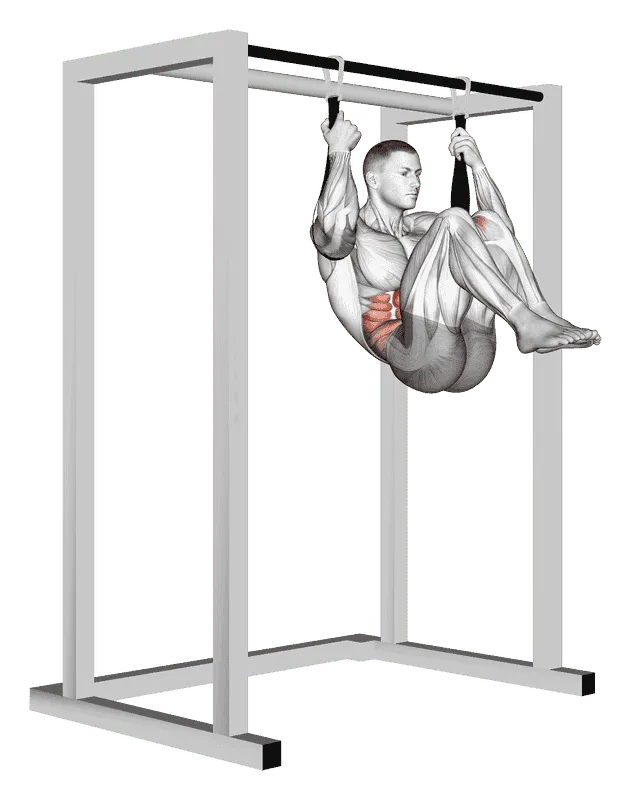
2 Hanging Bent Knee Raise - Sets
- 3
- Reps
- 8–12
- Rest
- 60 s
-
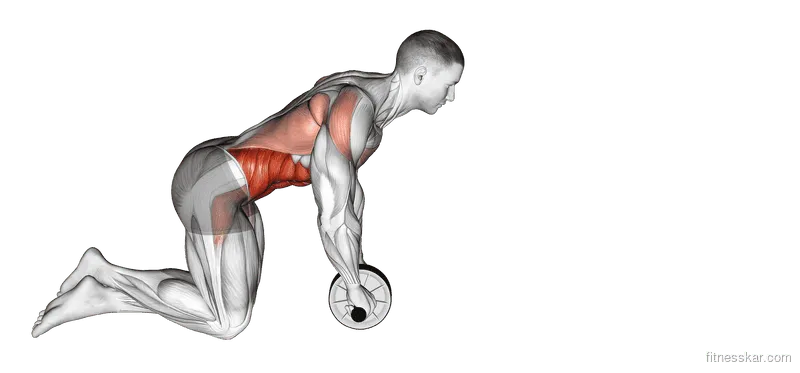
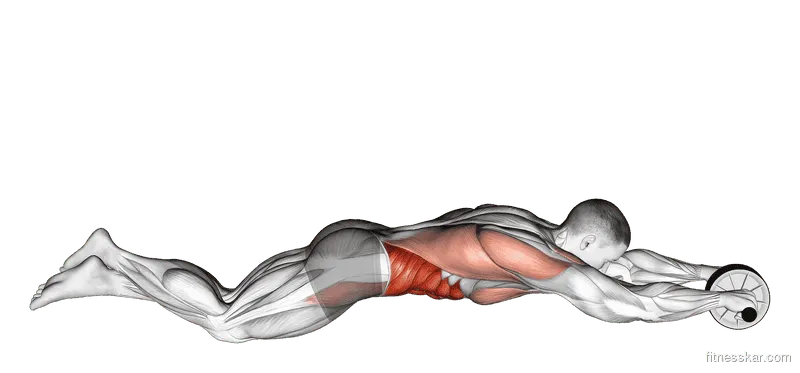
3 Ab Wheel Rollout - Sets
- 3
- Reps
- 6–10
- Rest
- 60 s
-
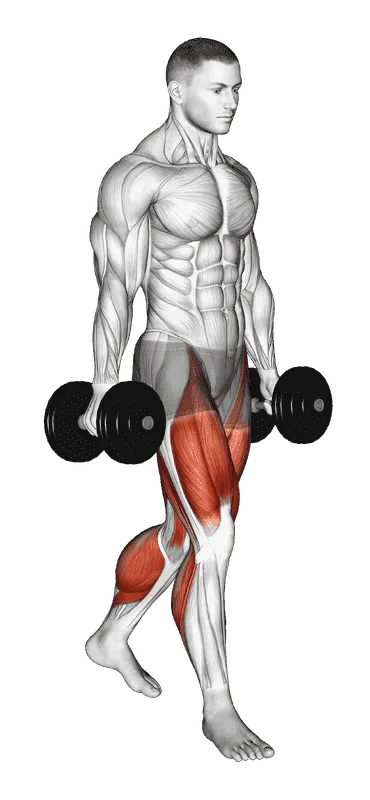
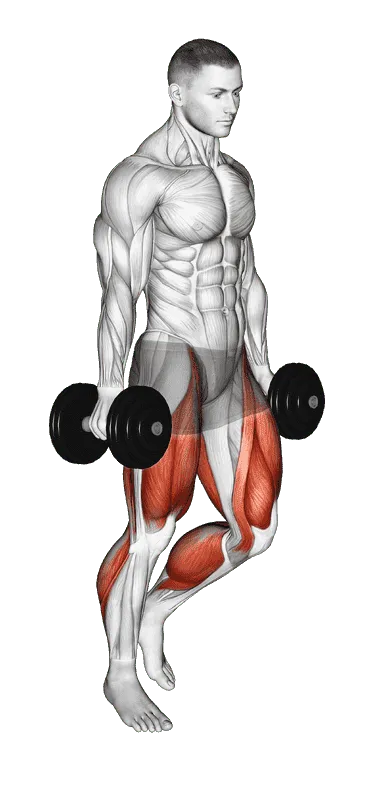
4 Farmer's Walk - Sets
- 3
- Rest
- 60 s
- Duration
- 30–40 s

How to progress your core work
Treat your core like any other muscle group and make it a little harder over time:
- Add time or reps first. Stretch planks toward 45–60 seconds and add a rep or two per side on dead bugs and bird dogs.
- Then make the exercise harder. Move from dead bugs to rollouts, and from front planks to Pallof presses and heavy carries.
- Slow down. A three-second lowering phase on every rep makes an easy exercise hard again.
- Keep form strict. If your lower back arches or your hips twist, the set is over.
Prefer a structured plan? This free six-week program adds two short core sessions to your week:
Putting it together: a week for a smaller waist
- Diet: a moderate calorie deficit that you can keep up for months.
- Strength: three full-body sessions built on big lifts.
- Cardio: two sessions, one steady and one with intervals.
- Core: two or three 10–15 minute circuits, added to strength or cardio days.
- Daily life: walk every day, and keep a regular sleep schedule.
For the full version with sets, reps and cardio sessions, see the best workout plan for fat loss.
A realistic timeline
How fast your waist shrinks depends on your overall rate of fat loss, not on how many ab exercises you do. Measure your waist every two weeks at the same time of day, in the same spot, and judge the trend over a month or more. Some weeks it will barely move, then drop.
A few tips make the numbers more reliable: measure first thing in the morning before you eat, use the same soft tape each time, keep it level all the way around and snug without pressing into the skin, and let your stomach relax rather than pulling it in. Write the result down, together with your weekly average weight, so you can see both trends side by side.
When to talk to a doctor
Ask your doctor for a check-up if your waist is above the thresholds in this article, especially if you also have high blood pressure, raised blood sugar or a family history of heart disease. A check-up gives you blood pressure, blood sugar and cholesterol numbers to track alongside your waist. And if your stomach grows quickly, or feels swollen, hard or painful, see a doctor rather than adding ab exercises: that needs a medical explanation, not a workout.
Mistakes to avoid
- Doing hundreds of crunches instead of fixing your diet. Ab work builds endurance, not a smaller waist.
- Watching only the scale. Your waist measurement tells you more about belly fat.
- Expecting your belly to go first. Fat comes off in the order your body chooses.
- Short-changing sleep. It is linked with more abdominal fat gain in younger adults.
Frequently asked questions
Do crunches burn belly fat?
No. In a six-week trial, ab exercises five days a week improved muscular endurance but didn't reduce belly fat or waist size compared with doing nothing. Belly fat comes off with overall fat loss.
What is the best exercise to lose belly fat?
There isn't a single one. Aerobic exercise has the strongest evidence for reducing visceral fat, strength training helps too, and a calorie deficit drives overall fat loss.
How long does it take to lose belly fat?
It depends on how much fat you have and how consistent your deficit is. Measure your waist every two weeks and expect progress over months rather than days.
Should I train my abs every day?
There's no need. Two or three core sessions a week is plenty, and your abs recover between sessions like any other muscle.
Is belly fat dangerous?
Fat stored around your waist is linked with a higher risk of heart disease and type 2 diabetes. A waist over about 88 cm (35 inches) for women or 102 cm (40 inches) for men is a sign to take action, and to talk to your doctor.
Sources
- Vispute SS, Smith JD, LeCheminant JD, Hurley KS. The effect of abdominal exercise on abdominal fat. Journal of Strength and Conditioning Research. 2011. pubmed.ncbi.nlm.nih.gov/21804427/ ↩
- Ramírez-Campillo R, Andrade DC, Campos-Jara C, et al. Regional fat changes induced by localized muscle endurance resistance training. Journal of Strength and Conditioning Research. 2013. pubmed.ncbi.nlm.nih.gov/23222084/ ↩
- Ismail I, Keating SE, Baker MK, Johnson NA. A systematic review and meta-analysis of the effect of aerobic vs. resistance exercise training on visceral fat. Obesity Reviews. 2012. pubmed.ncbi.nlm.nih.gov/21951360/ ↩
- Ross R, Neeland IJ, Yamashita S, et al. Waist circumference as a vital sign in clinical practice: a Consensus Statement from the IAS and ICCR Working Group on Visceral Obesity. Nature Reviews Endocrinology. 2020. pubmed.ncbi.nlm.nih.gov/32020062/ ↩
- National Heart, Lung, and Blood Institute. Aim for a Healthy Weight. National Institutes of Health. 2025. nhlbi.nih.gov/health/heart-healthy-living/healthy-weight ↩
- Wewege MA, Desai I, Honey C, et al. The effect of resistance training in healthy adults on body fat percentage, fat mass and visceral fat: a systematic review and meta-analysis. Sports Medicine. 2022. pubmed.ncbi.nlm.nih.gov/34536199/ ↩
- Hairston KG, Bryer-Ash M, Norris JM, et al. Sleep duration and five-year abdominal fat accumulation in a minority cohort: the IRAS family study. Sleep. 2010. pubmed.ncbi.nlm.nih.gov/20337186/ ↩