Every diet that works for fat loss, from low-carb to intermittent fasting, works the same way underneath: you take in less energy than you burn. That gap is your calorie deficit, and your body makes up the difference from its energy stores, including body fat.
The principle is simple. The details are where people get stuck: how to find your numbers, how big a deficit makes sense, and why the math gets fuzzier the longer you diet. This guide walks through all three.
What is a calorie deficit?
Your total daily energy expenditure (TDEE) is the number of calories you burn in a day. It has four parts:
- Resting metabolism: the energy your body uses just to stay alive. For most people, it is the biggest part.
- Digestion: the energy it takes to process food.
- Exercise: your workouts.
- Everyday movement: walking, climbing stairs, chores and fidgeting.
Eat about as many calories as your TDEE and your weight holds steady. That is your maintenance intake. Eat less and you are in a deficit.
Step 1: Estimate your maintenance calories
A good starting point is the Mifflin–St Jeor equation, developed from measurements in 498 healthy adults:[1]
- Men: (10 × weight in kg) + (6.25 × height in cm) − (5 × age in years) + 5
- Women: (10 × weight in kg) + (6.25 × height in cm) − (5 × age in years) − 161
That gives your resting energy expenditure. To estimate your TDEE, it is multiplied by an activity factor, which is what the calculator below does for you.
How accurate is it? A systematic review of the common equations found that Mifflin–St Jeor predicted resting metabolic rate within 10% of the measured value in more people than any other equation, but it also warned that noteworthy errors remain for individuals.[2] Use your result as a first estimate, then let two to three weeks of scale data tell you whether it is right.
Example: a 35-year-old woman who is 165 cm tall and weighs 70 kg burns about 10 × 70 + 6.25 × 165 − 5 × 35 − 161 ≈ 1,395 kcal a day at rest. Suppose that, with her activity level, the calculator puts her maintenance at about 1,950 kcal a day. A 30-year-old man who is 180 cm tall and weighs 85 kg burns about 10 × 85 + 6.25 × 180 − 5 × 30 + 5 = 1,830 kcal at rest; say his maintenance comes out around 2,700 kcal a day. We'll use both examples below.
Calorie calculator (TDEE)
- Resting energy (BMR)
- kcal/day
- Maintenance calories (TDEE)
- kcal/day
- For fat loss (about −20%)
- kcal/day
- For muscle gain (about +10%)
- kcal/day
Mifflin–St Jeor equation. Treat the number as a starting point and adjust it after two to three weeks of tracking your weight.
Step 2: Choose your deficit
The 2013 obesity guideline from the American Heart Association, the American College of Cardiology and The Obesity Society lists three ways to create a deficit. The first is an intake target, usually 1,200–1,500 kcal a day for women and 1,500–1,800 kcal a day for men, adjusted for body weight and activity. The second is a set deficit from your estimated needs: 500 or 750 kcal a day, or a 30% cut from maintenance. The third cuts back on particular foods or food groups without a formal calorie target.[3]
Speed matters too. According to the CDC, people who lose weight gradually and steadily, about 1–2 pounds (0.5–0.9 kg) a week, are more likely to keep it off than people who lose it faster.[4]
| Deficit | Maintenance 1,950 kcal | Maintenance 2,700 kcal | Best for |
|---|---|---|---|
| 500 kcal a day | 1,450 kcal | 2,200 kcal | Most people; a sustainable default |
| 750 kcal a day | 1,200 kcal | 1,950 kcal | More weight to lose, in shorter phases |
| 30% | 1,365 kcal | 1,890 kcal | Scales with your size |
If you lift and you're already fairly lean, a smaller deficit makes it easier to keep your muscle. Read how to lose fat without losing muscle for the details.
Why the 3,500-calorie rule overpromises
You have probably heard that a pound of fat holds 3,500 calories, so a 500-calorie daily deficit takes off exactly a pound a week, forever. Researchers tested that rule against seven tightly controlled weight-loss experiments and found that it grossly overestimates how much weight people actually lose over time.[5]
The reason is that the deficit does not stay the same. As you get lighter, you burn fewer calories, so the same menu produces a smaller and smaller gap. For a more realistic projection, try the NIH Body Weight Planner, which estimates the calories you need to reach your goal and to maintain it afterward.
Metabolic adaptation: why progress slows
Your body doesn't just burn less because it is smaller. In a classic study, researchers kept people at 10% or more below their starting weight and measured their energy use precisely. They burned about 6–8 fewer calories a day for every kilogram of fat-free mass, a compensatory drop that pushes back against the new, lower weight.[6]
For someone with 55 kg of fat-free mass, that works out to roughly 330–440 kcal a day, enough to erase most of a 500-calorie deficit if you never adjust. That is why a plan that worked in month one can stall by month three.
What to do about it:
- Recalculate your maintenance after every 4–5 kg you lose.
- Move more before you eat less. Adding daily steps is often easier than cutting food further.
- Keep protein high and keep lifting so more of what you lose is fat.
- Judge progress over two to three weeks, not day to day.
Track what you eat, honestly
Tracking is where many deficits quietly fail. In a New England Journal of Medicine study, a small group of people with obesity who said they could not lose weight despite eating under 1,200 kcal a day were measured carefully. Their metabolism was normal, within 5% of predicted values. Instead, they underreported what they ate by 47% and overreported their physical activity by 51%.[7]
That isn't dishonesty. Portions, cooking oil, drinks and bites while cooking are genuinely easy to miss. Some habits that help:
- Weigh your food with a kitchen scale for the first two to three weeks. It trains your eye for portions.
- Log cooking oils, sauces, drinks and snacks, not just meals.
- Weigh yourself most mornings and compare weekly averages.
- If your weekly average hasn't moved in two to three weeks, cut 100–200 kcal a day or add more steps.
Putting it together: your first four weeks
Here is how the woman from the example would run her first month:
- Week 0: maintenance about 1,950 kcal, so she sets her target at 1,450 kcal a day (a 500-calorie deficit).
- Weeks 1–2: she weighs her food, logs everything and weighs herself most mornings. She doesn't change anything yet.
- Week 3: she compares weekly averages. If she is losing about 0.5–0.9 kg a week, she keeps going.
- Week 4: if her average hasn't moved, she cuts another 100–200 kcal or adds a daily walk. If she is losing faster than planned and feels drained, she adds 100–200 kcal back.
After that, she repeats the check every two to three weeks and recalculates her maintenance each time she has lost another 4–5 kg.
What to eat in a deficit
Any mix of foods can create a deficit, but some make it easier to stick to:
- A protein source at every meal: chicken, fish, eggs, lean meat, yogurt, cottage cheese, lentils or beans.
- Plenty of vegetables and fruit: they fill your plate for relatively few calories.
- Whole grains and legumes for most of your carbohydrates.
- Measured fats: oils, nuts and butter are healthy in moderation, but they are dense in calories, so measure them.
- Fewer calorie-heavy drinks: sugary drinks, juices and alcohol add calories without adding food to your plate.

Protect your muscle while you diet
A deficit takes weight off. Protein and strength training decide how much of it is fat.
- Eat enough protein. Our guide to protein for muscle gain covers targets and food choices, and the macros guide shows how to split the rest of your calories between carbs and fat.
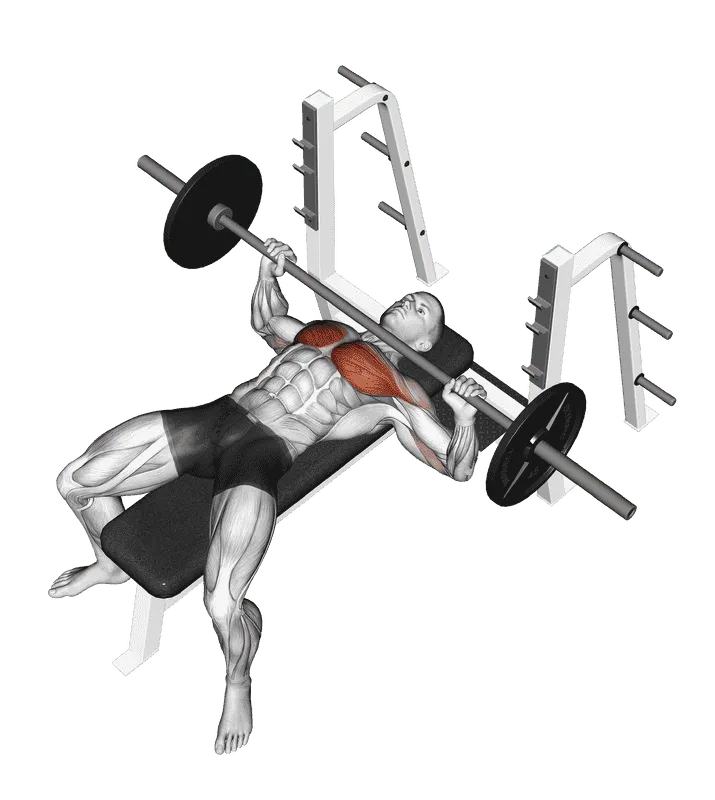
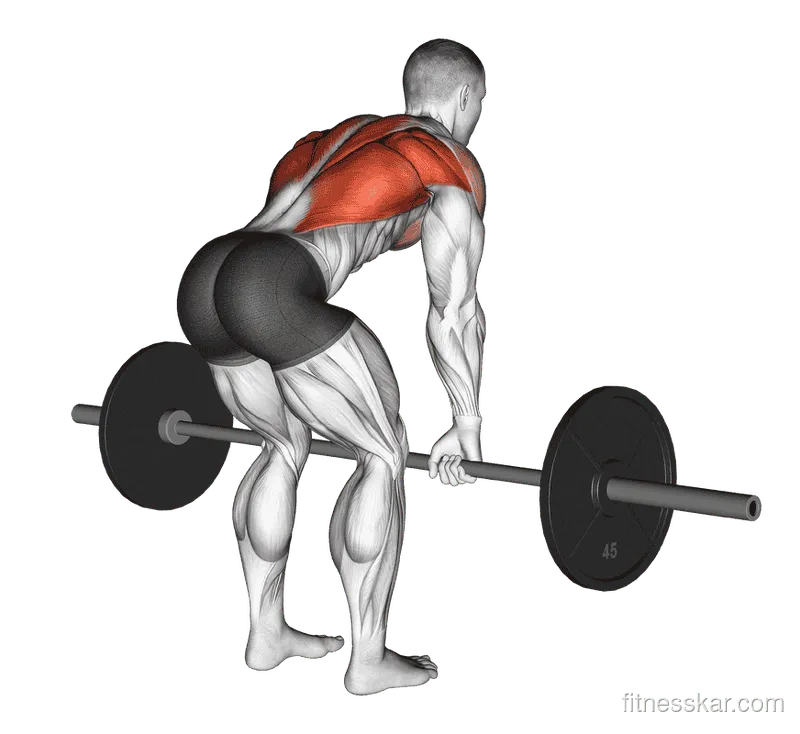
- Keep lifting two to three times a week with big compound lifts such as the barbell full squat, barbell bench press, barbell deadlift and barbell bent-over row.
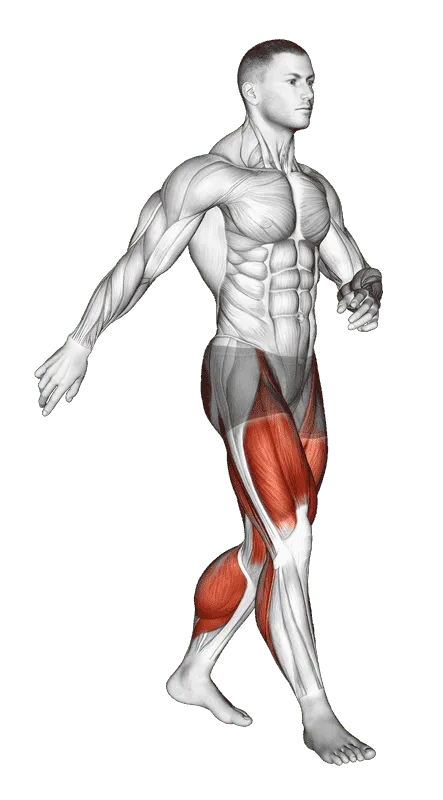
- Walk every day. Walking adds to your energy expenditure without eating into your recovery.
Frequently asked questions
How many calories should I eat to lose weight?
Start from your estimated maintenance calories and subtract 500 kcal a day, or up to 750 if you have more weight to lose. Adjust after two to three weeks based on your weekly average weight.
Is 1,200 calories a day safe?
It is the low end of the range clinical guidelines typically use for women, and it is too low for many active people. Very-low-calorie diets under 800 kcal a day should only be followed under medical supervision.
Why am I not losing weight in a calorie deficit?
The most common reasons are underestimating what you eat, a deficit that has shrunk as your weight dropped, and water fluctuations that hide fat loss for a week or two. Check your tracking and look at a two-to-three-week trend before changing anything.
Do I have to count calories forever?
No. Counting is a tool for learning your portions and calibrating your intake. Many people track closely for a few weeks, then switch to consistent meals and check in with the scale.
Sources
- Mifflin MD, St Jeor ST, Hill LA, Scott BJ, Daugherty SA, Koh YO. A new predictive equation for resting energy expenditure in healthy individuals. American Journal of Clinical Nutrition. 1990. pubmed.ncbi.nlm.nih.gov/2305711/ ↩
- Frankenfield D, Roth-Yousey L, Compher C. Comparison of predictive equations for resting metabolic rate in healthy nonobese and obese adults: a systematic review. Journal of the American Dietetic Association. 2005. pubmed.ncbi.nlm.nih.gov/15883556/ ↩
- Jensen MD, Ryan DH, Apovian CM, et al. 2013 AHA/ACC/TOS guideline for the management of overweight and obesity in adults. Circulation. 2014. pubmed.ncbi.nlm.nih.gov/24222017/ ↩
- Centers for Disease Control and Prevention. Steps for Losing Weight. CDC. 2025. cdc.gov/healthy-weight-growth/losing-weight/index.html ↩
- Thomas DM, Martin CK, Lettieri S, et al. Can a weight loss of one pound a week be achieved with a 3500-kcal deficit? Commentary on a commonly accepted rule. International Journal of Obesity. 2013. pubmed.ncbi.nlm.nih.gov/23628852/ ↩
- Leibel RL, Rosenbaum M, Hirsch J. Changes in energy expenditure resulting from altered body weight. New England Journal of Medicine. 1995. pubmed.ncbi.nlm.nih.gov/7632212/ ↩
- Lichtman SW, Pisarska K, Berman ER, et al. Discrepancy between self-reported and actual caloric intake and exercise in obese subjects. New England Journal of Medicine. 1992. pubmed.ncbi.nlm.nih.gov/1454084/ ↩