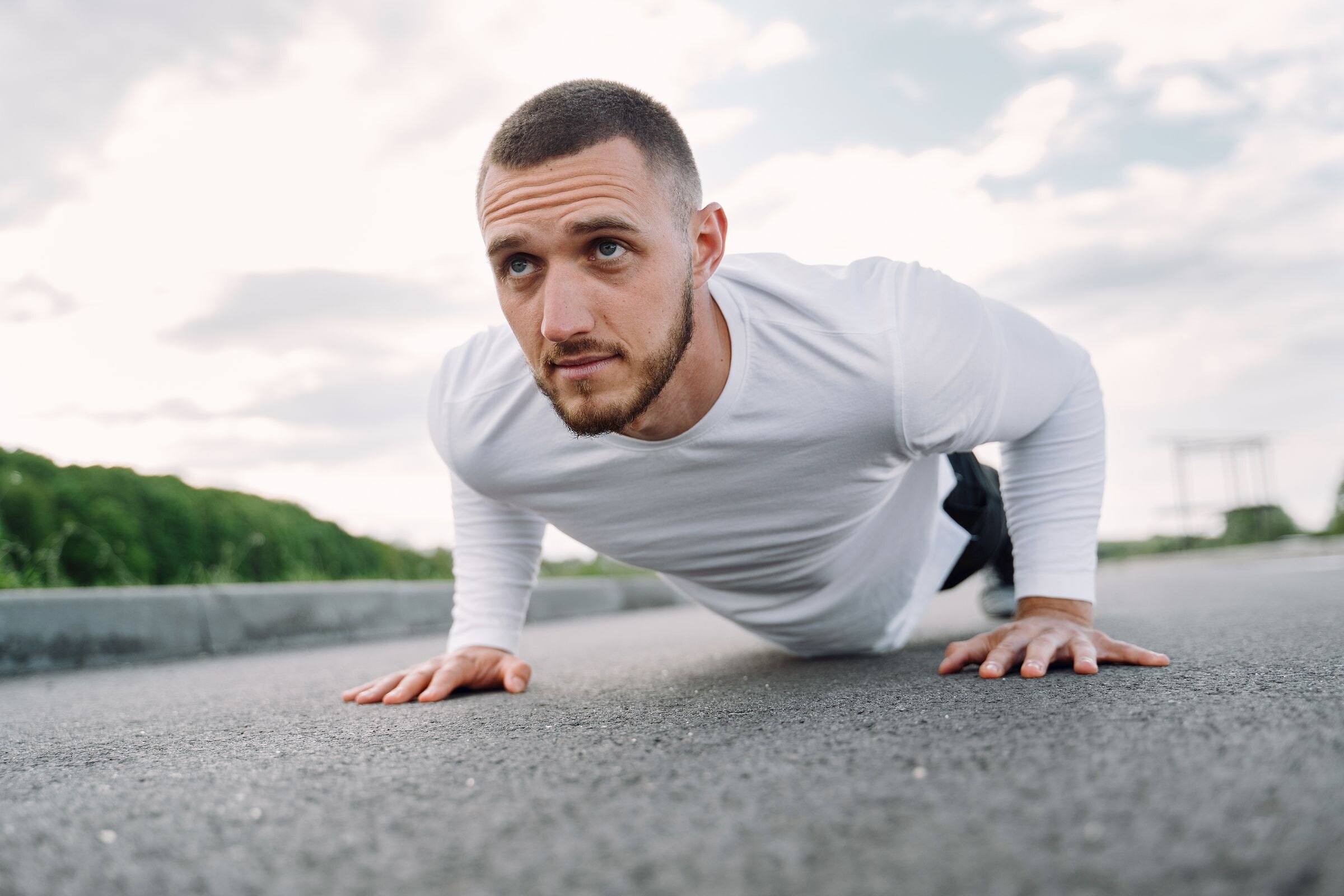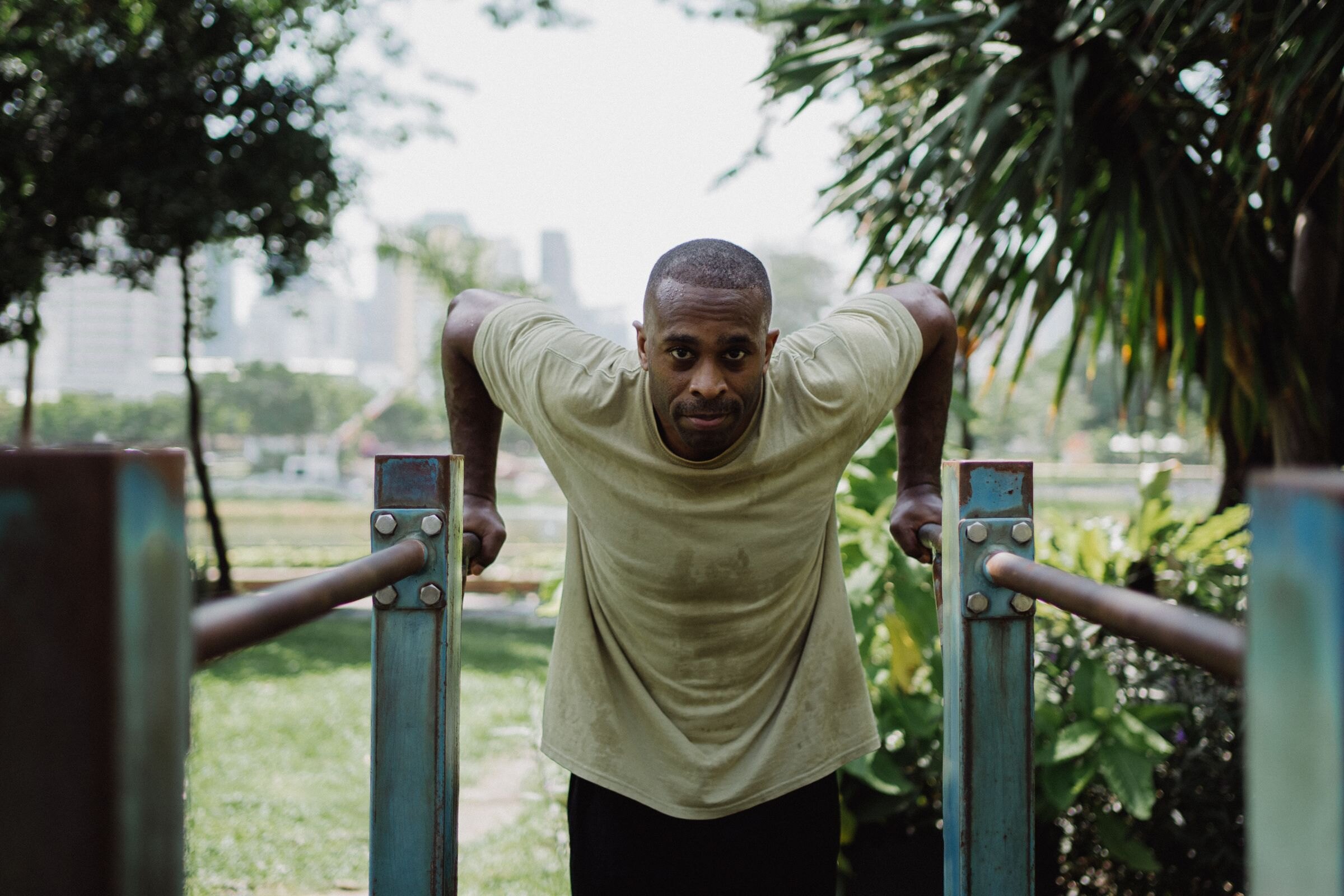
Your body weight is a real training load. The catch is that it never gets heavier on its own, so bodyweight exercises only keep building muscle if you keep making them harder. That is why every exercise on this list comes with a ladder: an easier version to start with and a harder one to grow into.
The research is encouraging. In an eight-week study in young men, push-ups adjusted to match 40% of each person's bench press max built similar muscle and strength to bench pressing at that same load.[1] In another, men who worked through progressively harder push-up variations for four weeks improved their bench press max, just like a group that trained on the bench.[2] More broadly, a meta-analysis found that light loads build about as much muscle as heavy ones when every set is pushed to failure.[3] What matters is effort, not the weight on a bar.
The World Health Organization recommends muscle-strengthening work for all major muscle groups on two or more days a week.[4] The exercises below cover every one of them.
Chest, shoulders and triceps
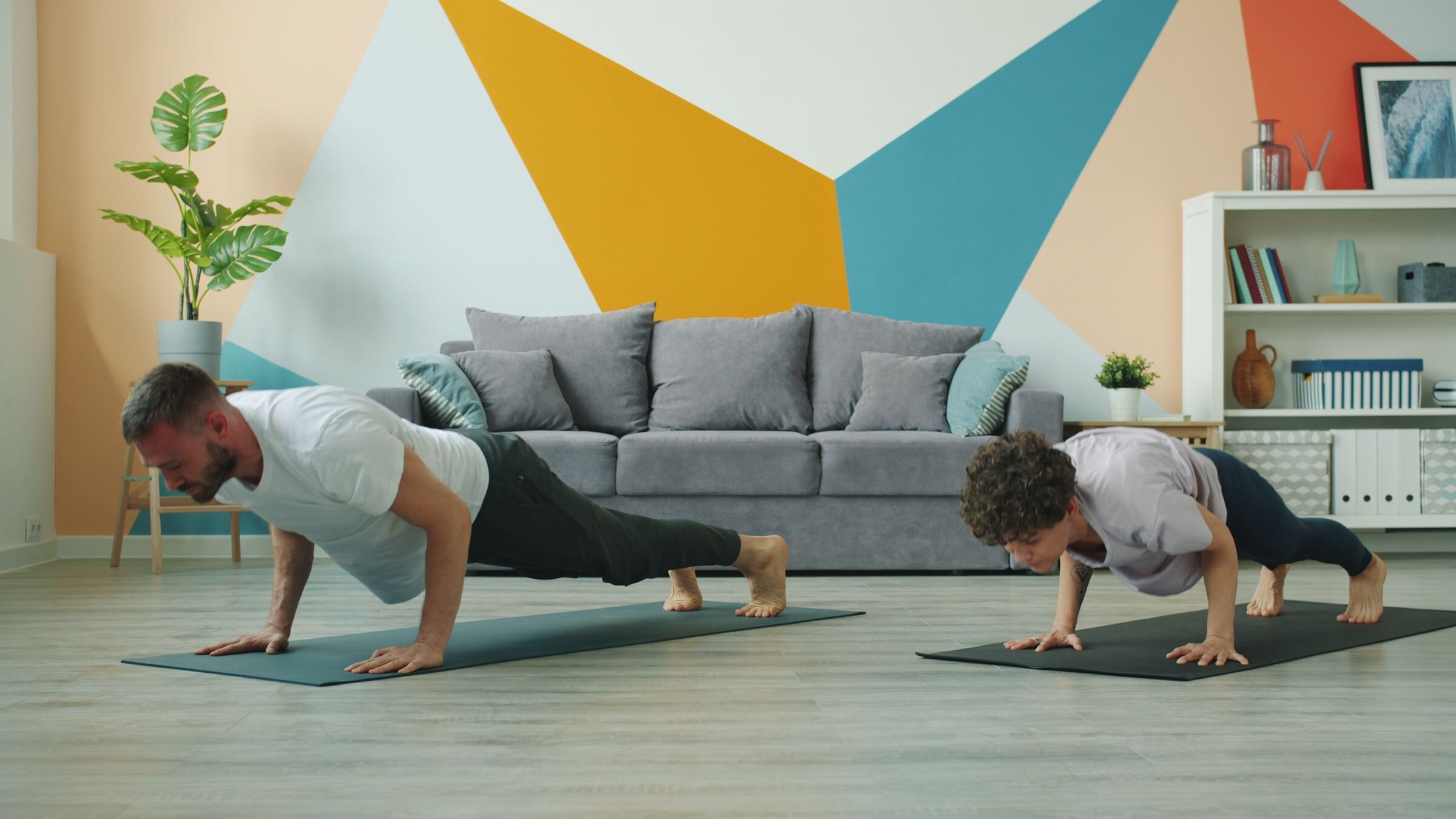
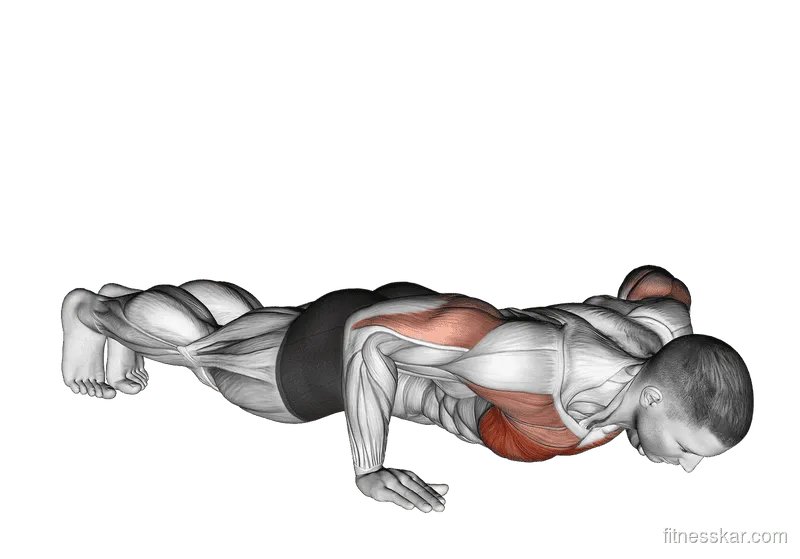
1. Push-up
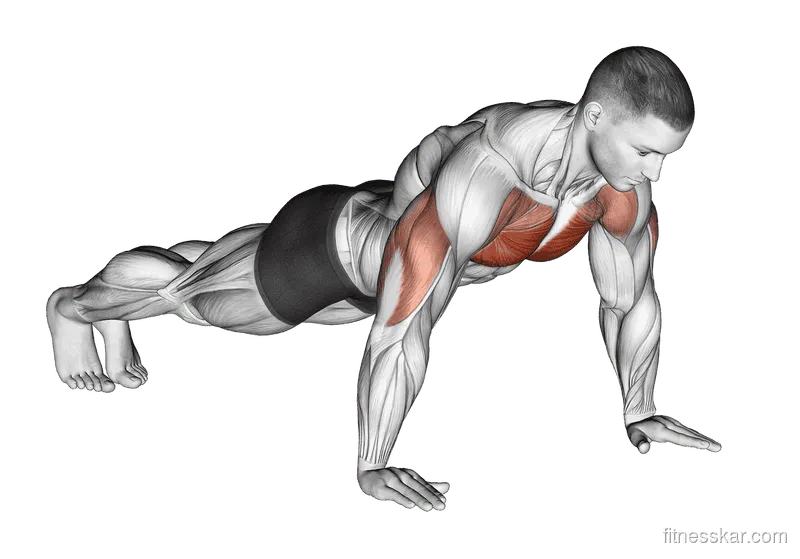
The push-up trains your chest, the front of your shoulders and your triceps, and your abs work hard to hold the plank.
- Sets
- 3
- Reps
- 6–20
- Rest
- 90 s
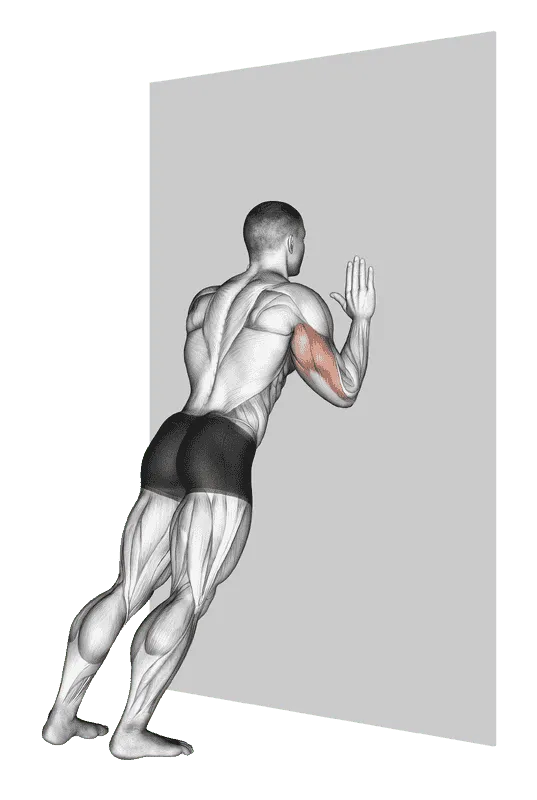
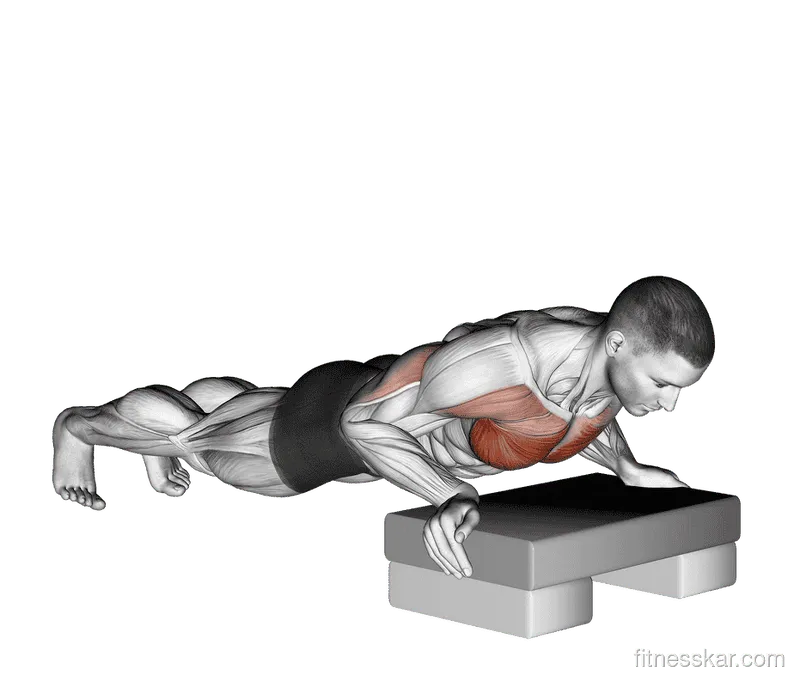
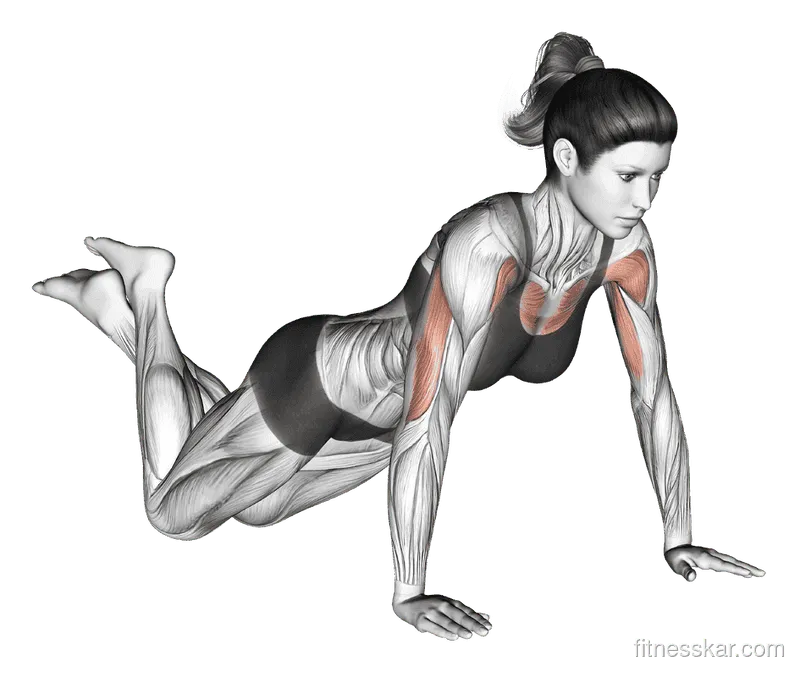
Scale it with your body angle. Raising your hands on a wall or a bench, or dropping to your knees, makes it easier, and raising your feet makes it harder. In a force-plate study, feet-elevated push-ups loaded the arms more than every other variation, while hands-elevated and knee push-ups loaded them less.[5] The ladder runs wall push-up, incline push-up, knee push-up, full push-up, then decline push-up. Our push-up variations guide walks through every step.
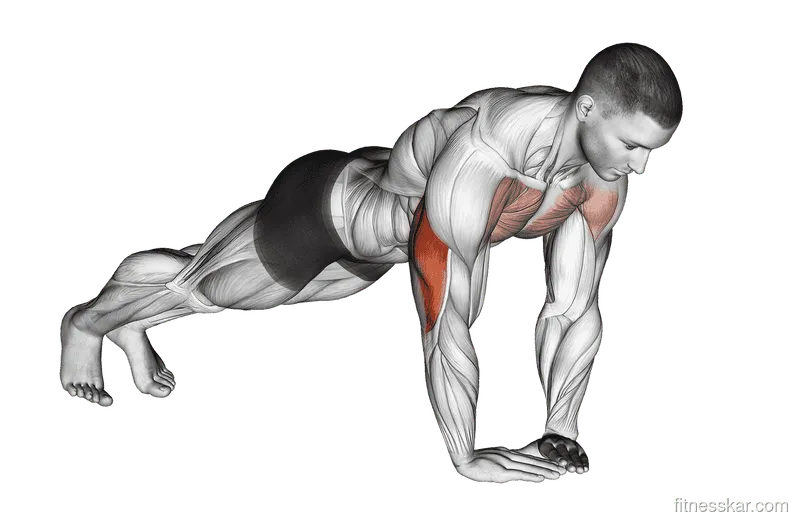
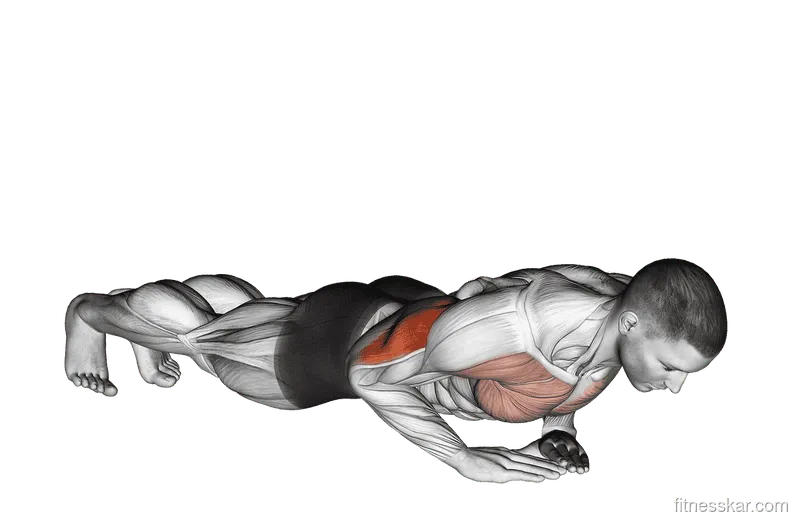
2. Diamond push-up
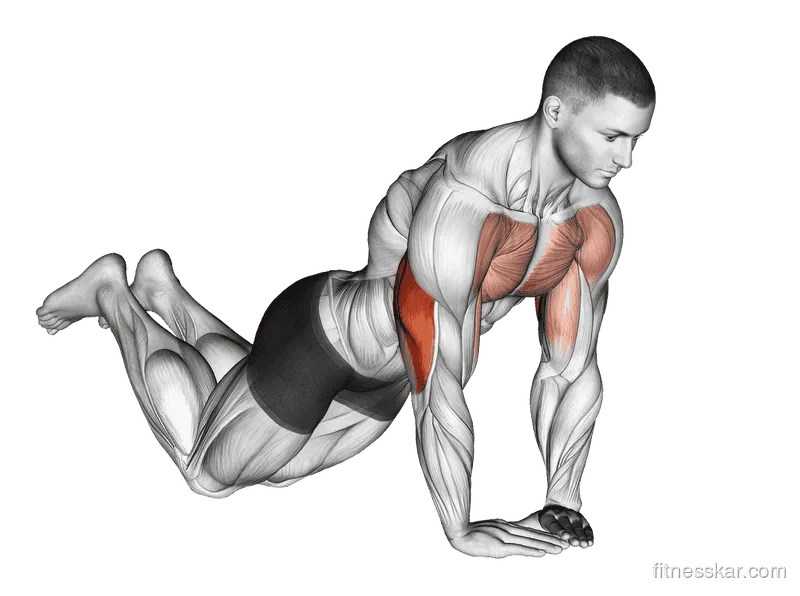
Bringing your hands together under your chest makes your triceps work harder.
- Sets
- 3
- Reps
- 5–15
- Rest
- 90 s
A study comparing hand positions found more chest and triceps activity with a narrow hand position than with a wide one.[6] If the full version is too hard, start with the diamond push-up on your knees.
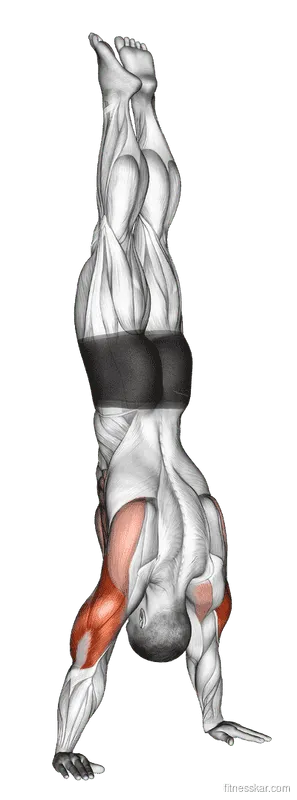
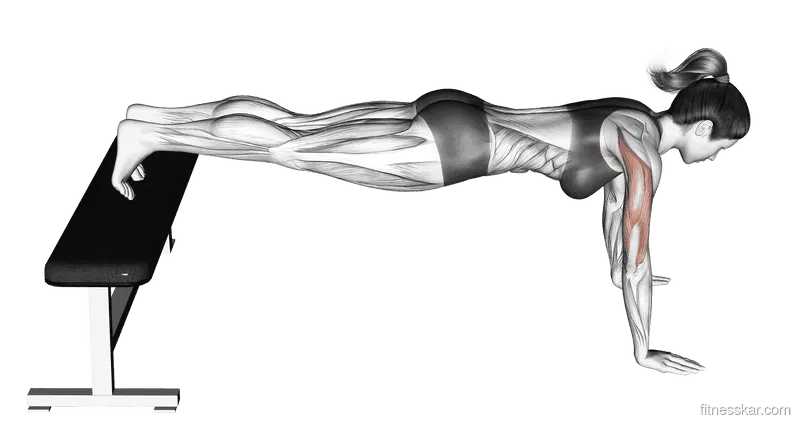
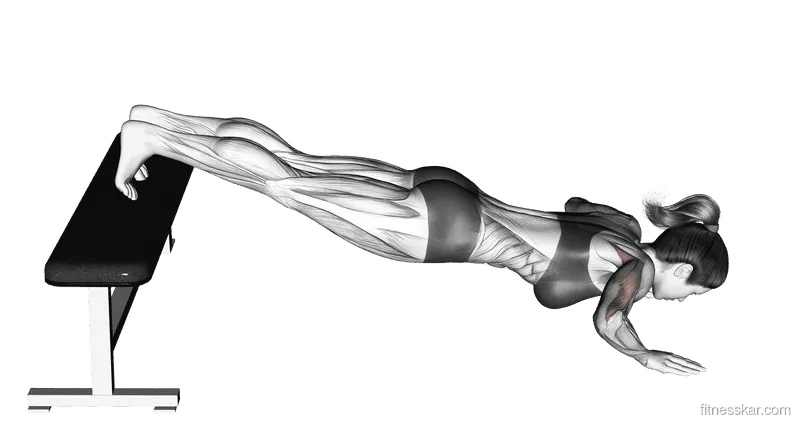
3. Decline push-up to handstand push-up
The higher your feet, the more of your weight your arms carry and the more your shoulders take over.
- Sets
- 3
- Reps
- 6–15
- Rest
- 90 s
The long-term goal for shoulder strength is the handstand push-up against a wall. Only attempt it once you can hold a wall handstand comfortably, and skip it if you have shoulder or neck problems.
Back and biceps
Pulling is the weak spot of bodyweight training, because you need something to pull on. These three options cover most homes.
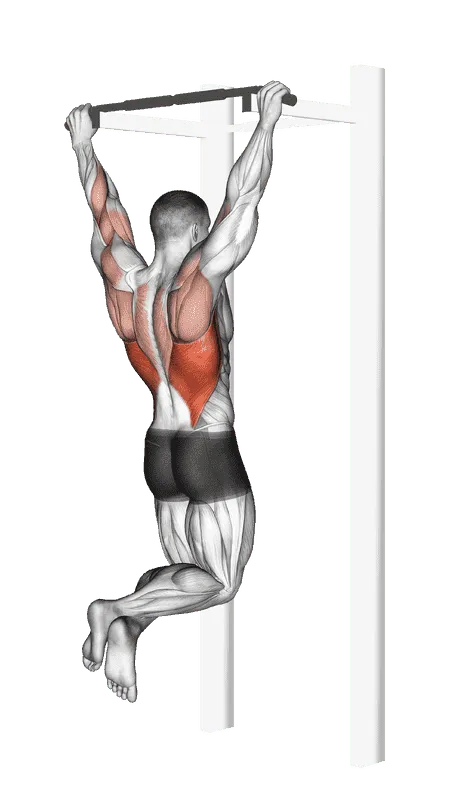
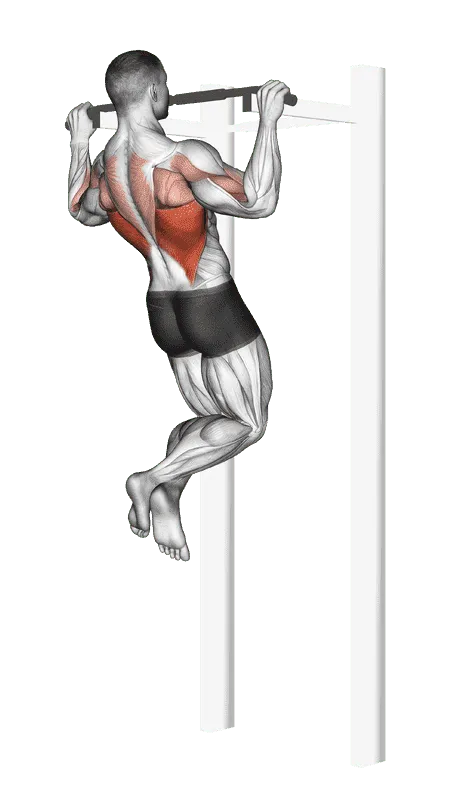
4. Pull-up and chin-up
- Sets
- 3
- Reps
- 3–10
- Rest
- 120 s
A doorway bar is one of the most useful things you can buy for training at home. Many people find the underhand chin-up a little easier. If you cannot do one yet, jump to the top and lower yourself over three to five seconds, or use a band-assisted pull-up.
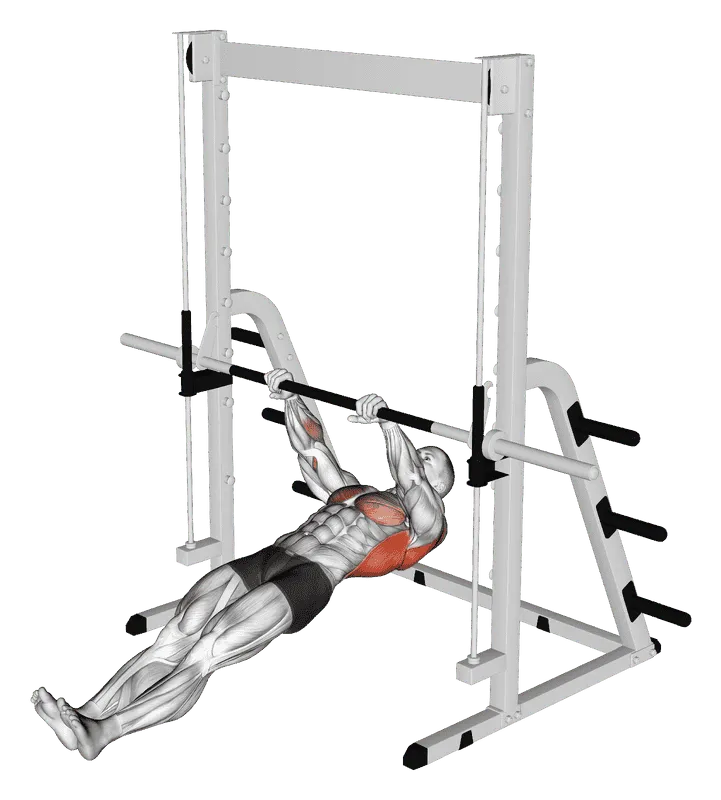
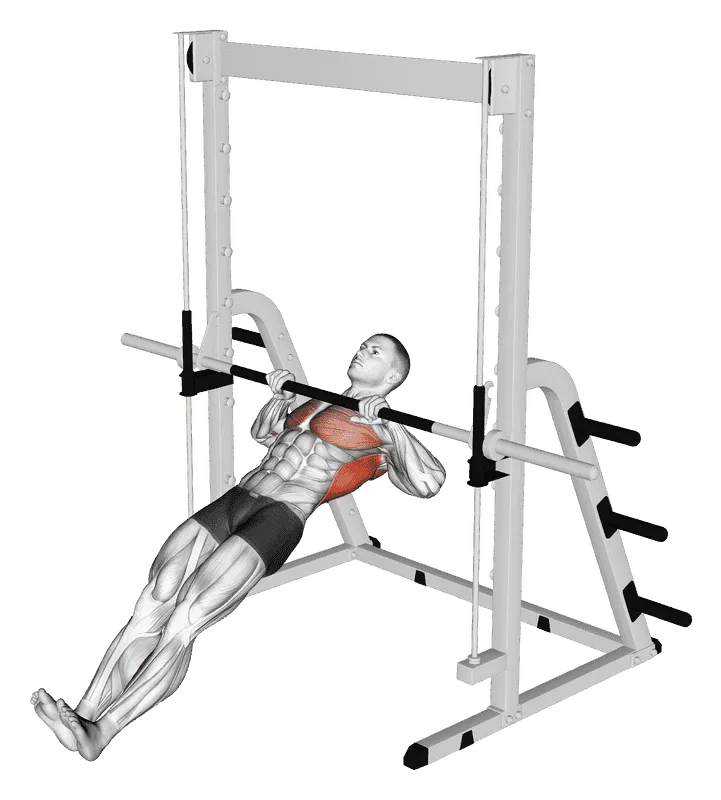
5. Inverted row
- Sets
- 3
- Reps
- 6–15
- Rest
- 90 s
The more upright your body, the easier the row; walk your feet forward to make it harder. At home, a low, solidly fixed bar works. Only use a table if it is heavy enough that it cannot tip or slide.
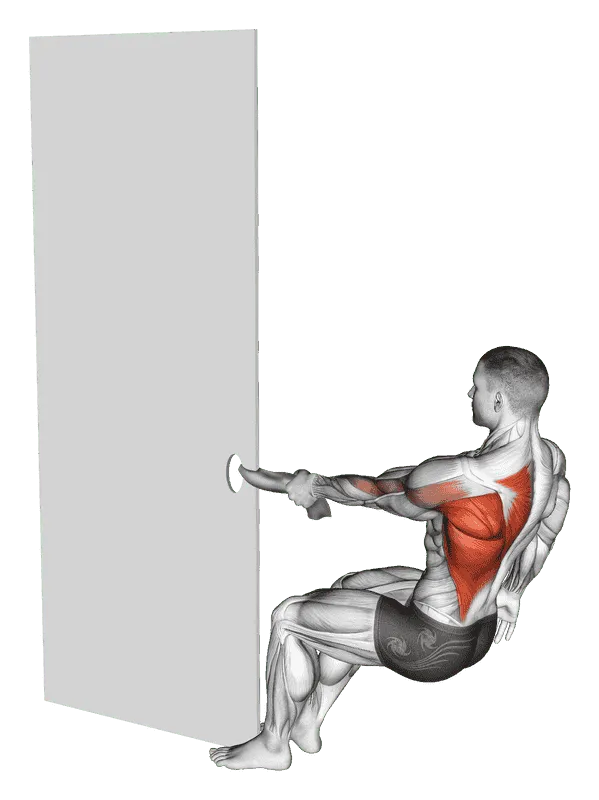
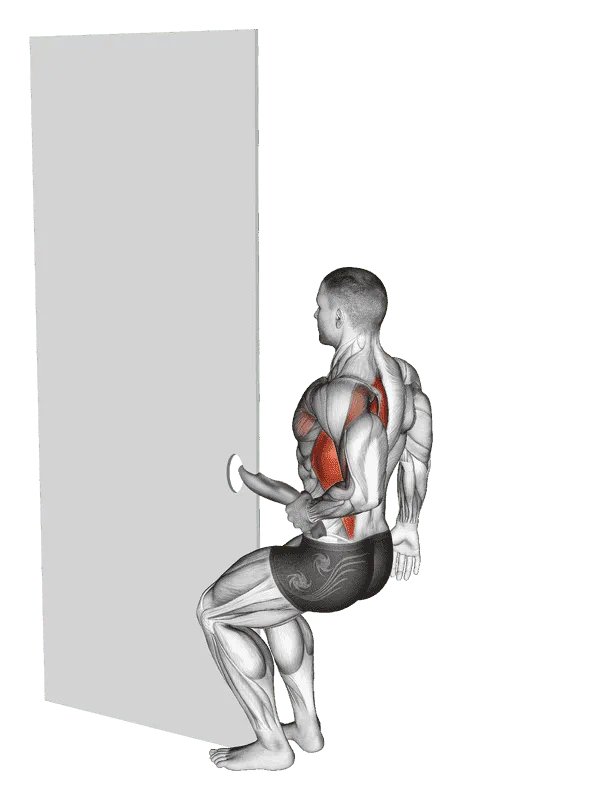
6. Towel row
- Sets
- 3
- Reps
- 10–15
- Rest
- 60 s
No bar at all? This one-arm row only needs a towel and a solid anchor. The further you lean back, the harder it gets. If you use a door handle, close the door and stand on the side it opens away from, so your pull presses it into the frame.
Legs and glutes
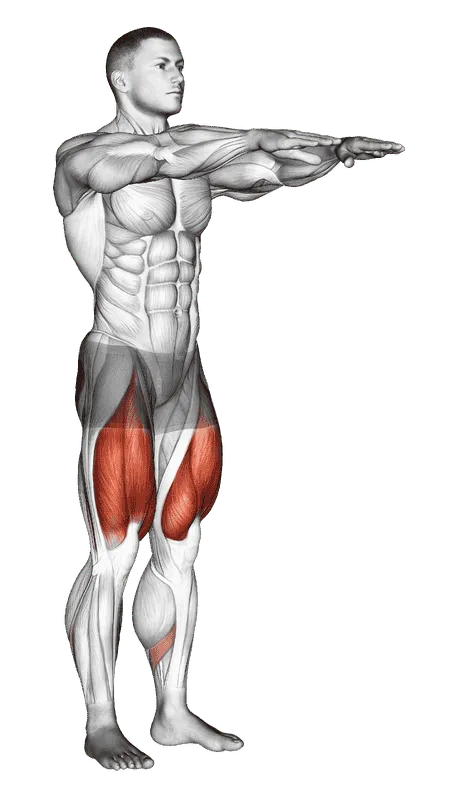
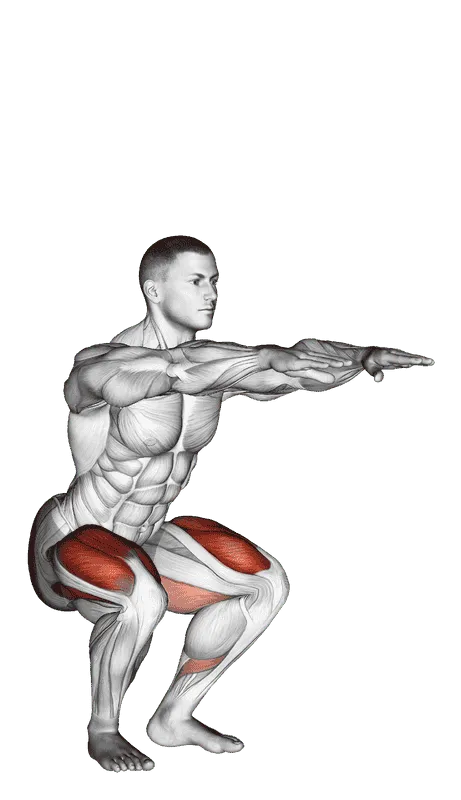
7. Squat to pistol squat
- Sets
- 3
- Reps
- 12–25
- Rest
- 60 s
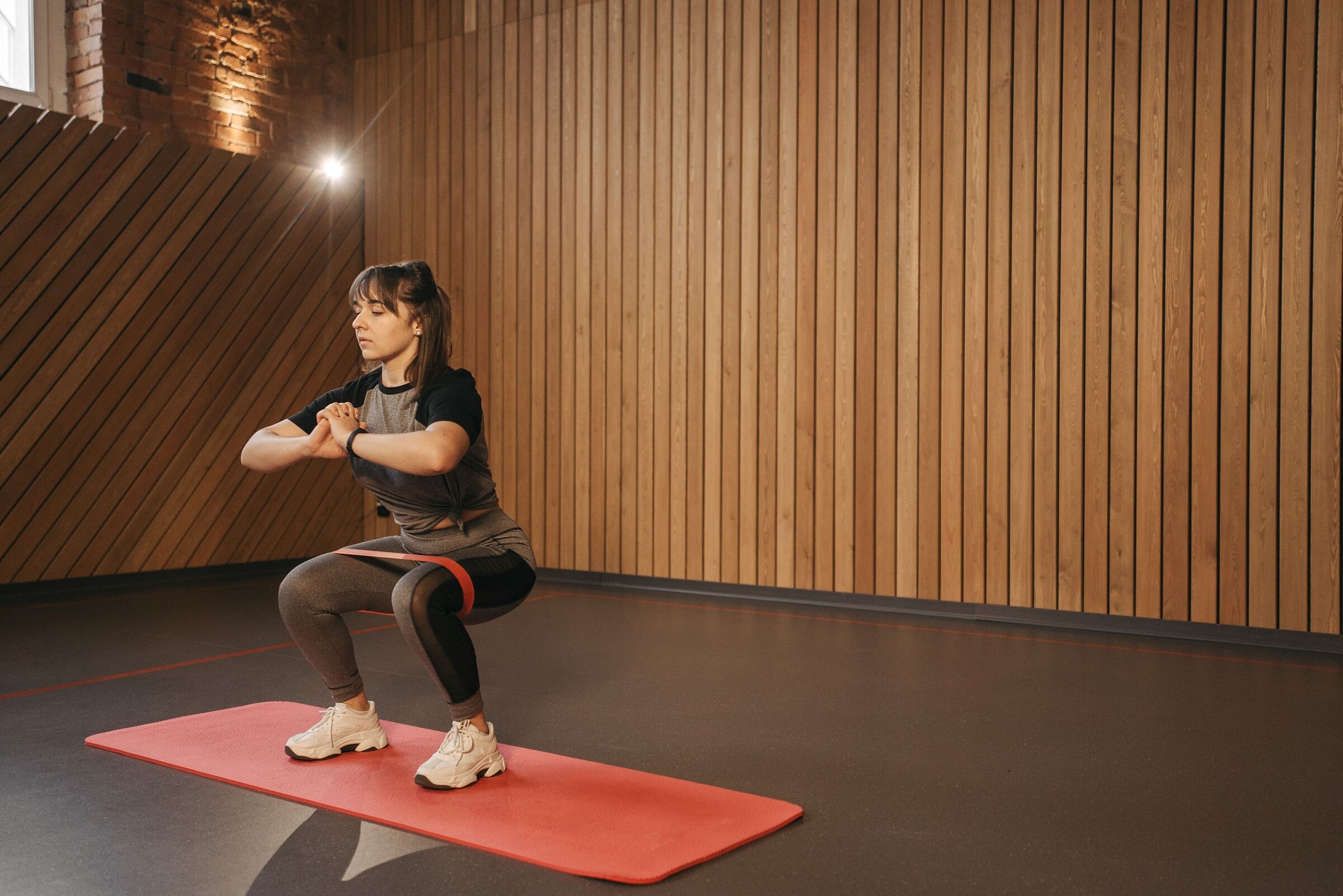
Most people outgrow the two-legged squat quickly. The simplest way to overload your legs without weights is to put more of your weight on one leg: split squat, then Bulgarian split squat, then assisted single-leg squat, and finally the pistol squat.
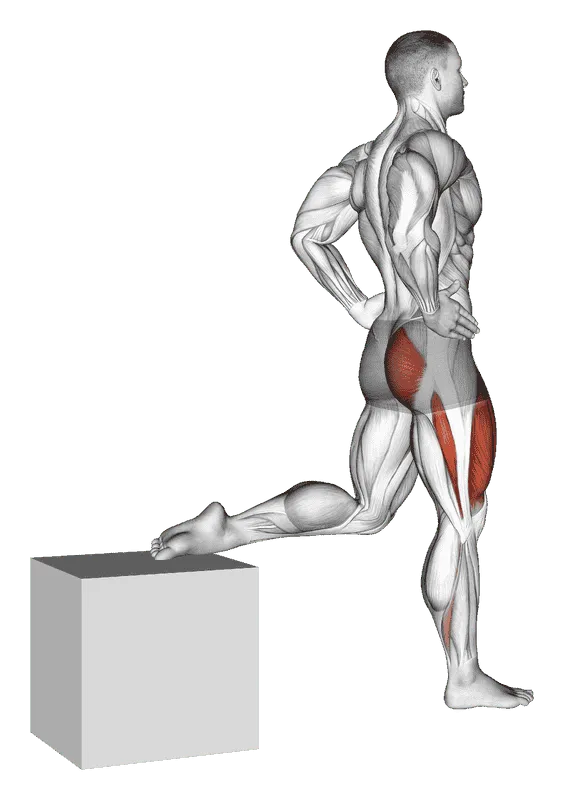
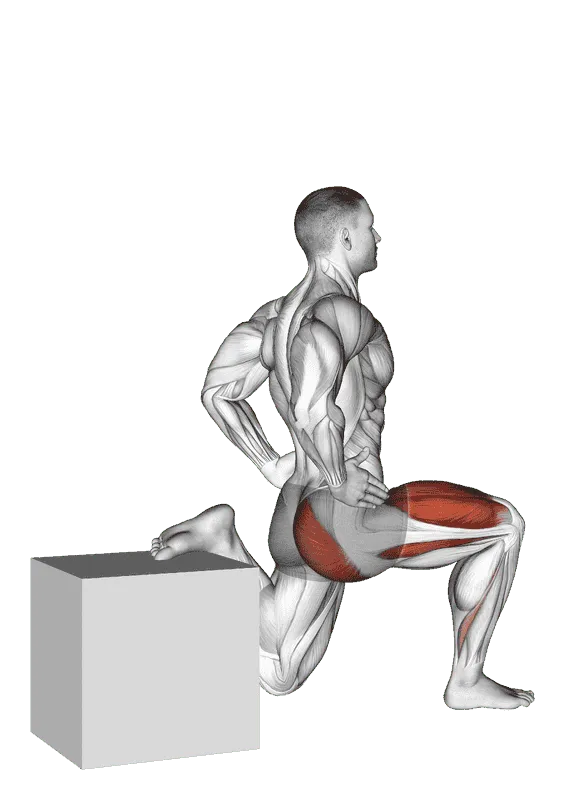
8. Bulgarian split squat
- Sets
- 3
- Reps
- 8–15
- Rest
- 90 s
For people who train at home, this is one of the most useful leg exercises there is. Do all your reps on one leg, then switch. For a version without a chair, use the reverse lunge.
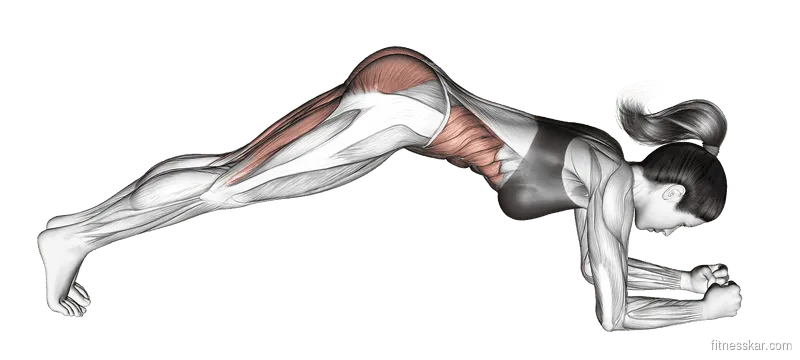
9. Glute bridge to hip thrust
- Sets
- 3
- Reps
- 12–20
- Rest
- 60 s
Progress to the single-leg bridge, then to the hip thrust with your upper back on a sofa or bench, which lets your hips travel further.
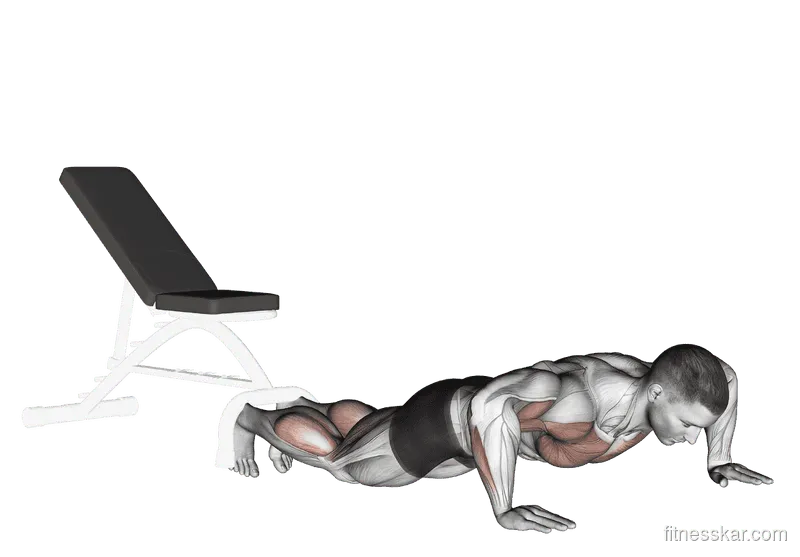
10. Assisted Nordic-style hamstring curl

- Sets
- 2–3
- Reps
- 4–8
- Rest
- 90 s
The hamstrings are hard to load without equipment, and this exercise does it well. Lower more slowly and push off less with your hands as you get stronger. Expect sore hamstrings after your first sessions, so start with two sets.
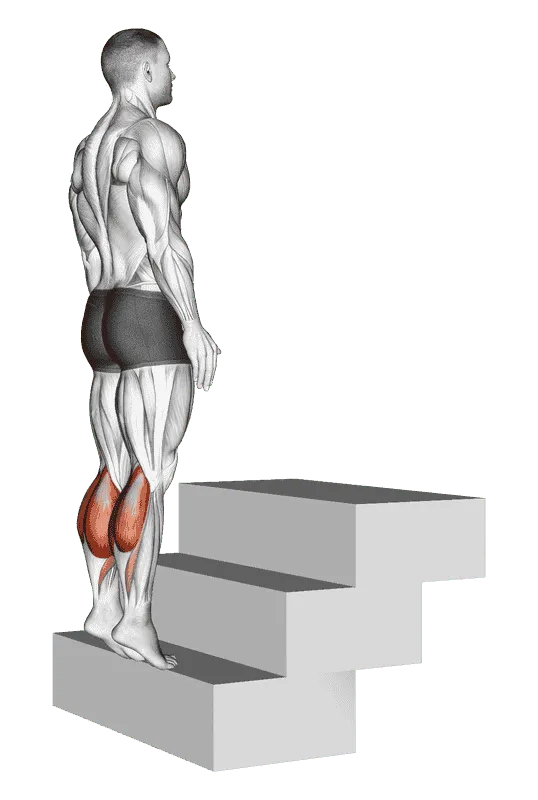
11. Calf raise

- Sets
- 3
- Reps
- 12–20
- Rest
- 60 s
When two legs get easy, switch to the single-leg calf raise.
Core
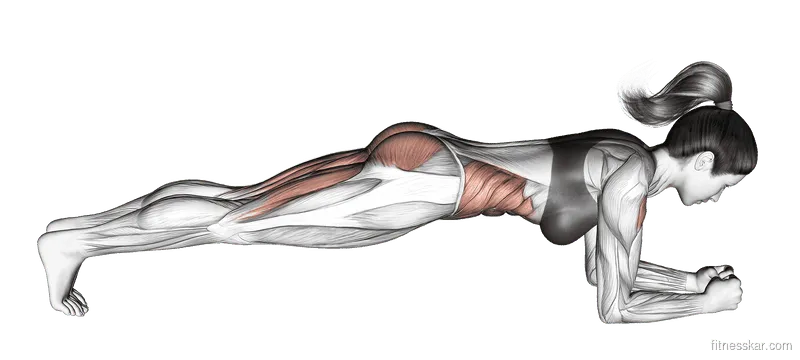
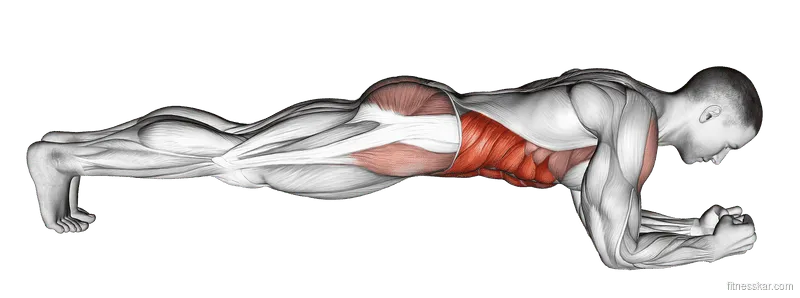
12. Plank and side plank
- Sets
- 3
- Rest
- 45 s
- Duration
- 20–60 sec
Once you can hold a plank for 60 seconds, make it harder rather than longer. Move on to the side plank, which trains the muscles along the sides of your waist.
13. Dead bug
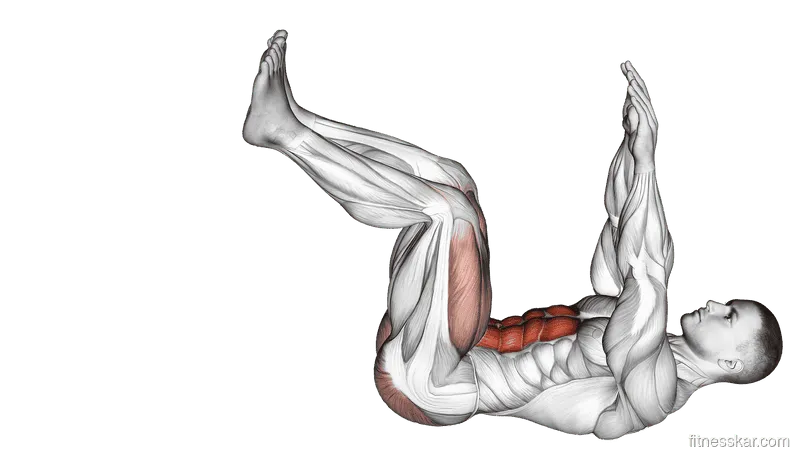
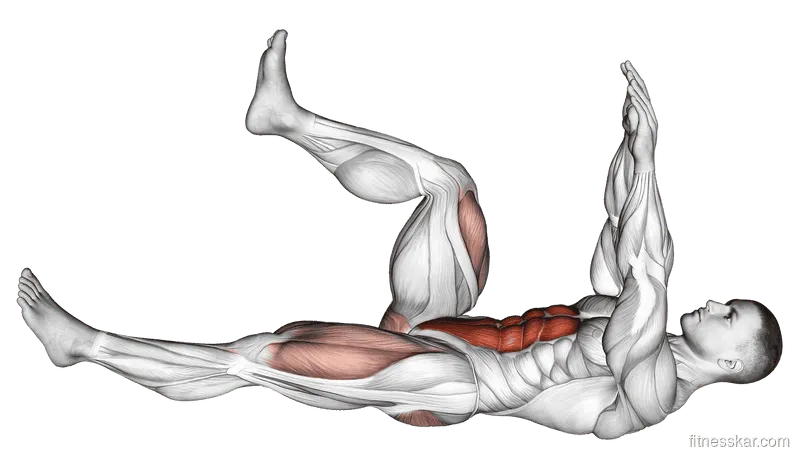
- Sets
- 3
- Reps
- 6–10
- Rest
- 45 s
The harder progressions are the hollow hold and the lying leg raise.
How to keep making them harder
Your muscles respond to effort, so each set has to stay challenging. Once a set gets easy, change one of these:
- Leverage: raise your feet, lower the incline, or move from two legs to one.
- Reps: add reps until you reach the top of your range, then change the variation.
- Tempo: take three seconds to lower, or pause for two seconds at the bottom. The exercise gets harder without any new equipment.
- Range of motion: do push-ups with your hands on books or handles so your chest can go lower, or split squats from a low step.
- Load: wear a backpack filled with books or water bottles.
You do not need to reach failure on every set. A meta-analysis found at most a trivial muscle-growth advantage for training to failure over stopping short,[7] so ending most sets with one to three good reps left is enough. The same principle drives every good program; see our guide to progressive overload.
Putting it together
Train your whole body two or three times a week on non-consecutive days. A simple split is two alternating workouts:
| Workout A | Workout B |
|---|---|
| Push-up or an easier step | Decline push-up or diamond push-up |
| Inverted row or towel row | Pull-up or chin-up |
| Bulgarian split squat | Squat or assisted single-leg squat |
| Glute bridge | Nordic-style hamstring curl |
| Plank | Dead bug |
Do two to four sets of each exercise and rest 60 to 120 seconds between sets. For a ready-made circuit, see our full-body home workout with no equipment.
FAQ
Frequently asked questions
Can you build muscle with bodyweight exercises alone?
Yes. Studies show that push-ups can build as much chest and triceps muscle as bench pressing at a matched load, and that light loads build muscle about as well as heavy ones when the sets are taken to failure. The limit is your legs and back, which outgrow basic squats and need single-leg work, a pull-up bar or extra load over time.
How many reps should I do?
Anything from about 6 to 20 reps works well if the set ends one to three reps short of failure. When you can do more than 20 to 25 clean reps, move to a harder variation instead of adding more reps.
How often should I train?
Two or three full-body sessions a week, on non-consecutive days, trains every muscle group at least twice, in line with the WHO recommendation.
Do I need a pull-up bar?
Not strictly. Towel rows and inverted rows under a solid bar train your back, but a doorway pull-up bar is the most useful piece of equipment you can add at home.
What is the single best bodyweight exercise?
There isn't one, because no single exercise trains every muscle. If you only have time for two, pick a push-up variation and a single-leg squat variation, then add a row as soon as you can.
Sources
- Kikuchi N, Nakazato K. Low-load bench press and push-up induce similar muscle hypertrophy and strength gain. Journal of Exercise Science & Fitness. 2017. pubmed.ncbi.nlm.nih.gov/29541130/ ↩
- Kotarsky CJ, Christensen BK, Miller JS, Hackney KJ. Effect of progressive calisthenic push-up training on muscle strength and thickness. Journal of Strength and Conditioning Research. 2018. pubmed.ncbi.nlm.nih.gov/29466268/ ↩
- Schoenfeld BJ, Grgic J, Ogborn D, Krieger JW. Strength and hypertrophy adaptations between low- vs. high-load resistance training: a systematic review and meta-analysis. Journal of Strength and Conditioning Research. 2017. pubmed.ncbi.nlm.nih.gov/28834797/ ↩
- Bull FC, Al-Ansari SS, Biddle S, et al. World Health Organization 2020 guidelines on physical activity and sedentary behaviour. British Journal of Sports Medicine. 2020. pubmed.ncbi.nlm.nih.gov/33239350/ ↩
- Ebben WP, Wurm B, VanderZanden TL, et al. Kinetic analysis of several variations of push-ups. Journal of Strength and Conditioning Research. 2011. pubmed.ncbi.nlm.nih.gov/21873902/ ↩
- Cogley RM, Archambault TA, Fibeger JF, et al. Comparison of muscle activation using various hand positions during the push-up exercise. Journal of Strength and Conditioning Research. 2005. pubmed.ncbi.nlm.nih.gov/16095413/ ↩
- Refalo MC, Helms ER, Trexler ET, Hamilton DL, Fyfe JJ. Influence of resistance training proximity-to-failure on skeletal muscle hypertrophy: a systematic review with meta-analysis. Sports Medicine. 2023. pubmed.ncbi.nlm.nih.gov/36334240/ ↩