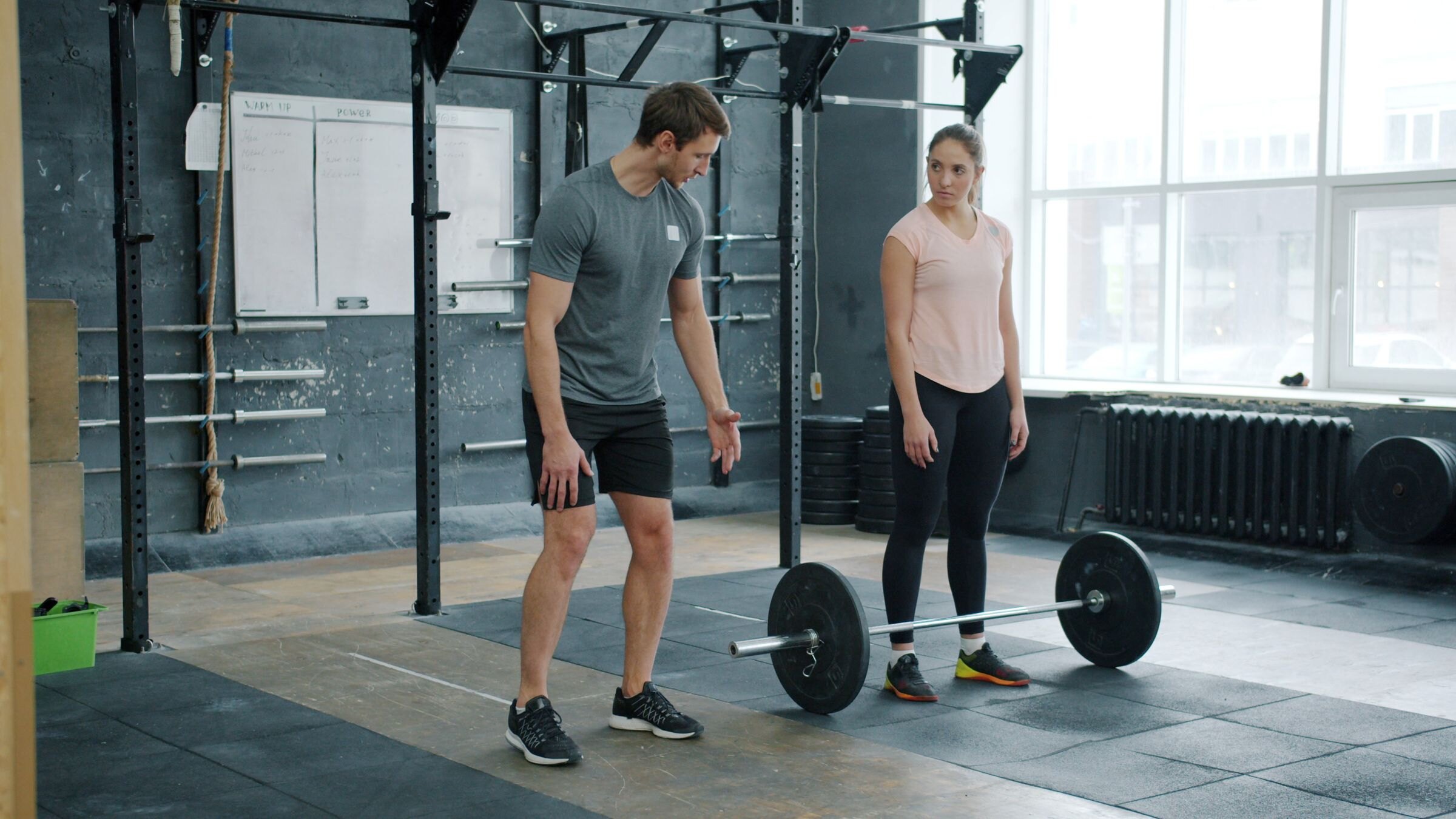
The best workout plan for fat loss does three jobs. It protects your muscle, and may even build some. It adds to your calorie deficit. And it keeps you moving outside the gym.
Your diet creates most of the deficit (our guide to calorie deficits shows you how to set it up), but your training decides how much of the weight you lose is fat, and how strong and fit you are when you get there. Here is a complete weekly plan that covers all three jobs.
The weekly plan at a glance
| Day | Session | Time |
|---|---|---|
| Monday | Strength, Workout A | 45–60 minutes |
| Tuesday | Steady-state cardio | 30–45 minutes |
| Wednesday | Strength, Workout B | 45–60 minutes |
| Thursday | Rest or an easy walk | – |
| Friday | Strength, Workout A | 45–60 minutes |
| Saturday | Interval cardio | 20–25 minutes |
| Sunday | Rest or a long walk | – |
Every day: aim for 7,000–10,000 steps. The following week, swap the strength days to B, A, B.
Part 1: Strength training, three days a week
The World Health Organization recommends muscle-strengthening activity that works all major muscle groups on two or more days a week for every adult.[1] During a diet, lifting has an extra job. In a six-month trial of older adults with obesity who were dieting, the groups that lifted, alone or combined with aerobic exercise, lost less lean mass than the aerobic-only group (2–3% vs. 5%), and the combined group improved physical function the most.[2]
Why full-body sessions?
Training your whole body three times a week hits every major muscle group two or three times, which is what the guidelines ask for. It also makes the plan forgiving: if you miss a session, no muscle group goes a whole week untrained, as it would on a body-part split. And spreading the work for each muscle across the week keeps every session manageable while you're eating less.
Warm-up (5–8 minutes)
- Five minutes of easy cycling or brisk walking.
- Ten slow bodyweight squats to open up your hips and knees.
- One or two light sets of your first lift, at about half your working weight.
Then start the workout:
Workout A
-
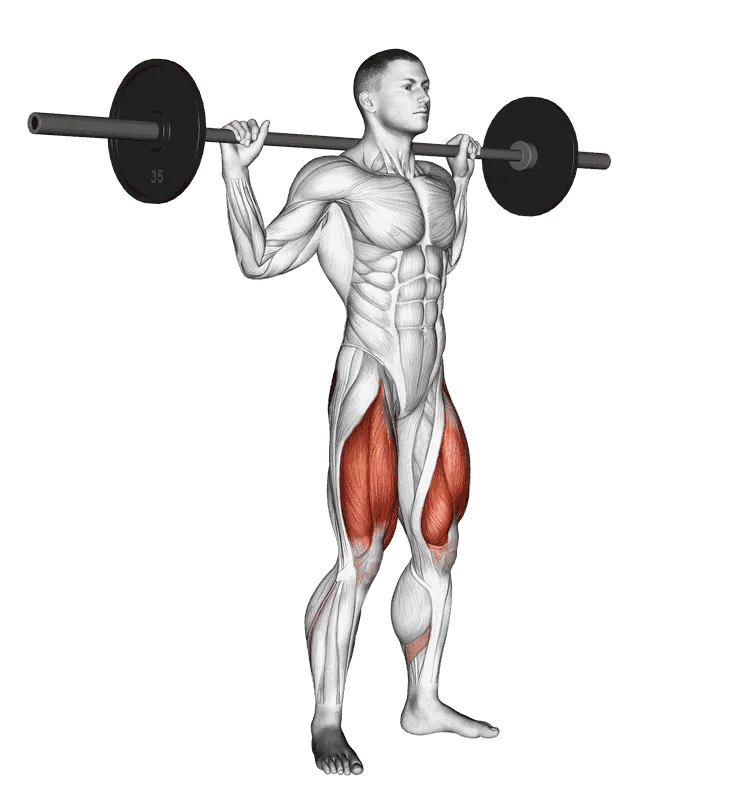
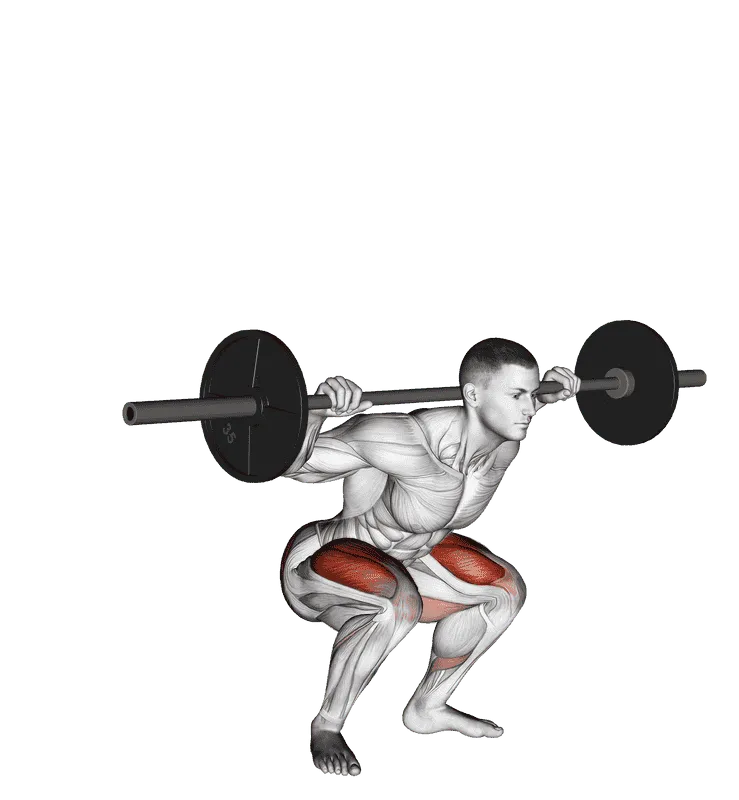
1 Barbell Full Squat - Sets
- 3
- Reps
- 6–8
- Rest
- 150 s
-
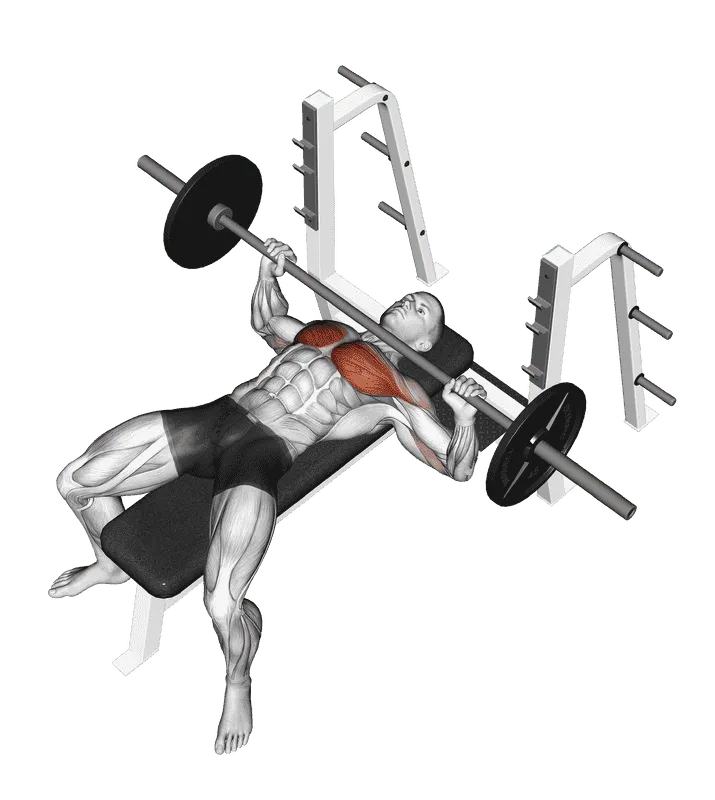
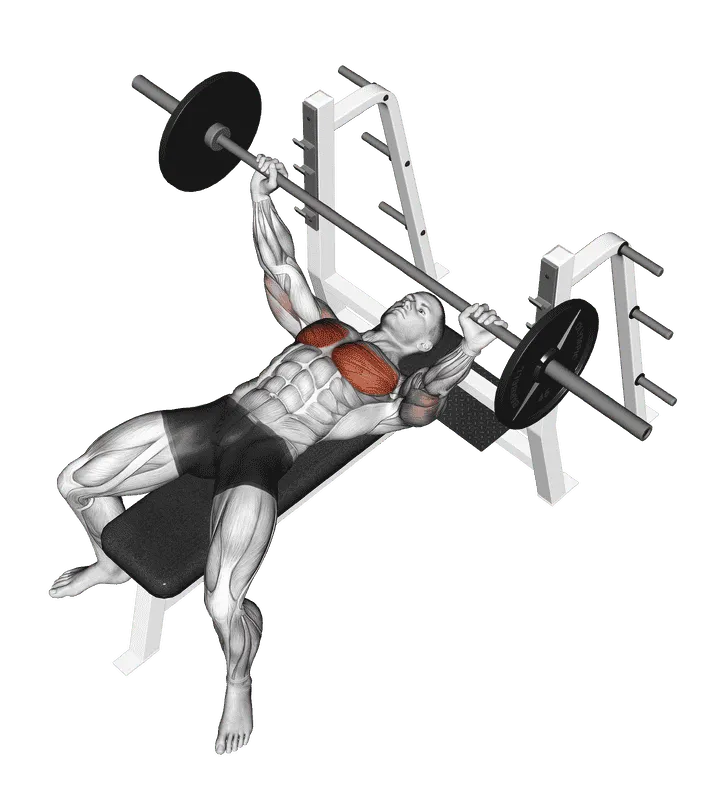
2 Barbell Bench Press - Sets
- 3
- Reps
- 6–8
- Rest
- 150 s
-
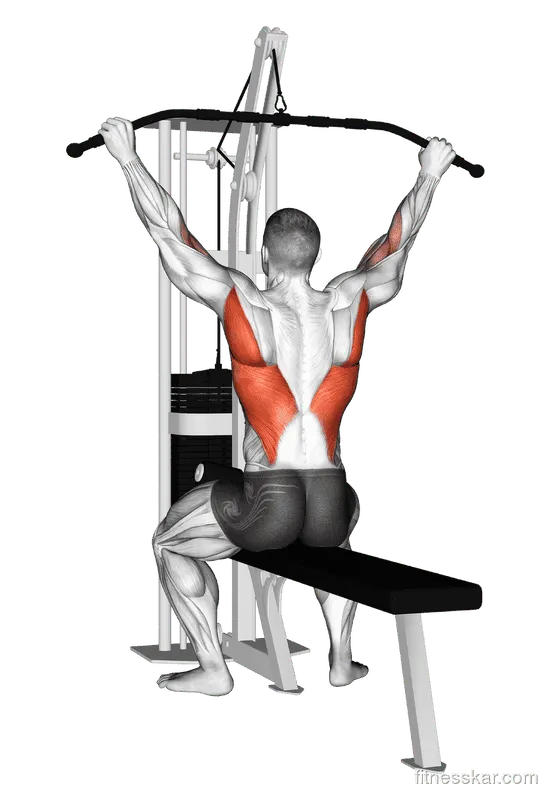
3 Lat Pulldown - Sets
- 3
- Reps
- 8–12
- Rest
- 90 s
-
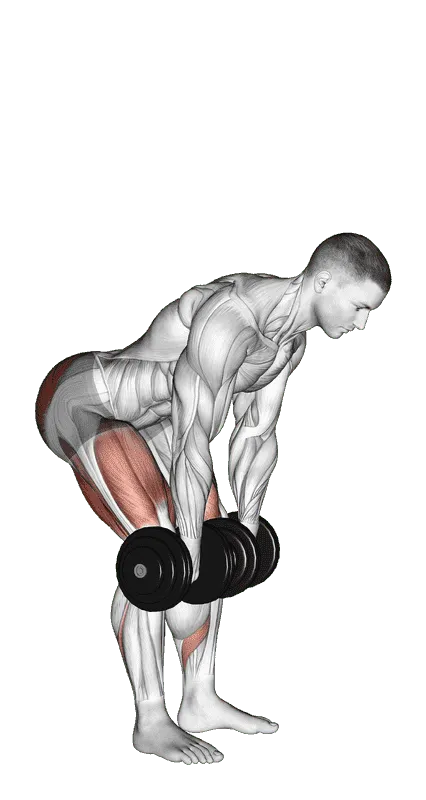
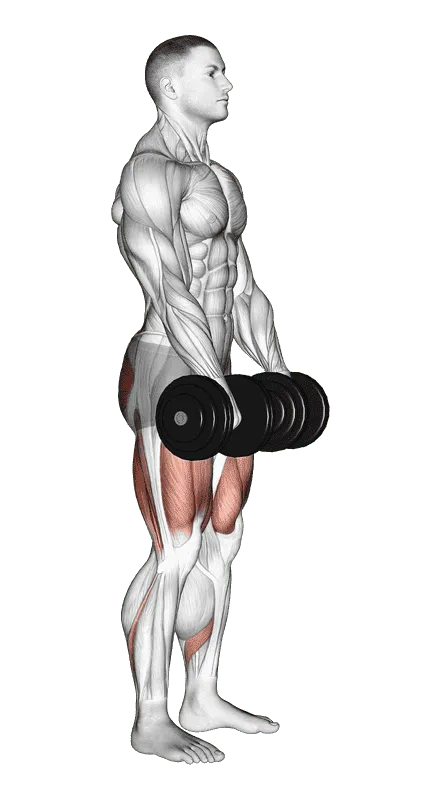
4 Dumbbell Romanian Deadlift - Sets
- 3
- Reps
- 8–10
- Rest
- 90 s
-
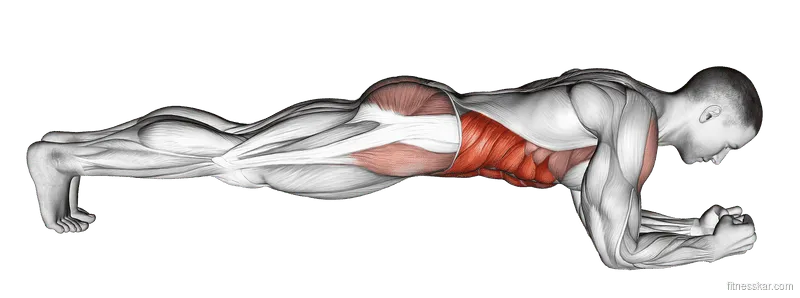
5 Front Plank - Sets
- 3
- Rest
- 60 s
- Duration
- 30–45 s
Workout B
-
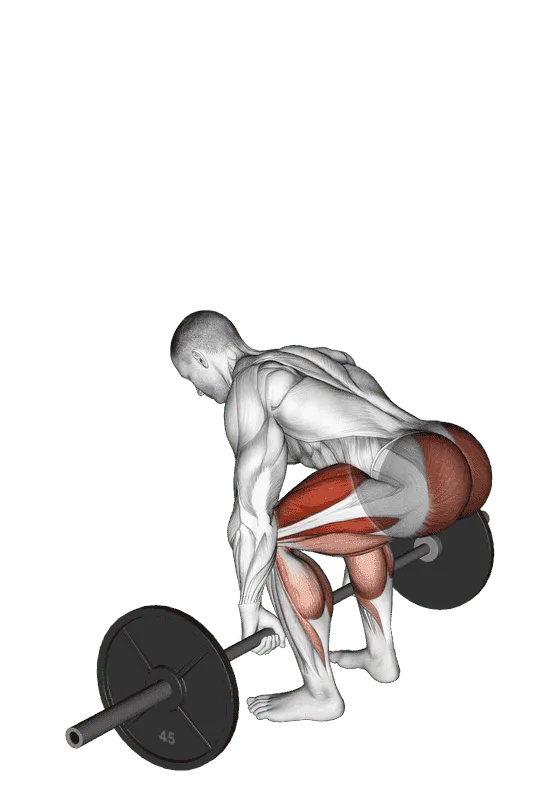
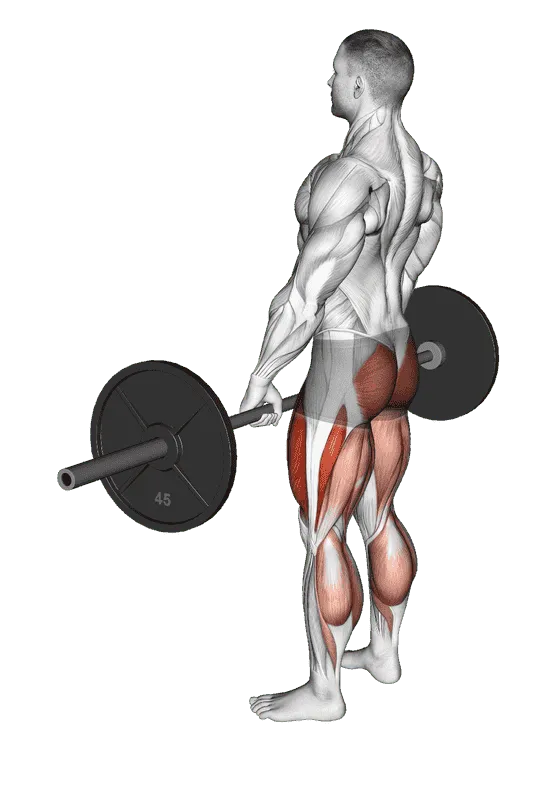
1 Barbell Deadlift - Sets
- 3
- Reps
- 4–6
- Rest
- 180 s
-
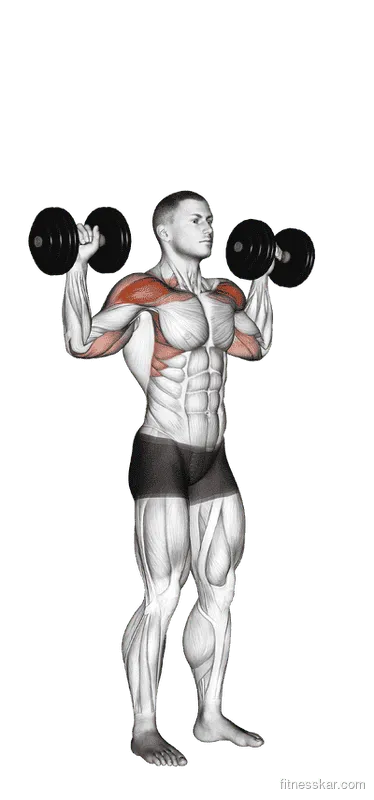
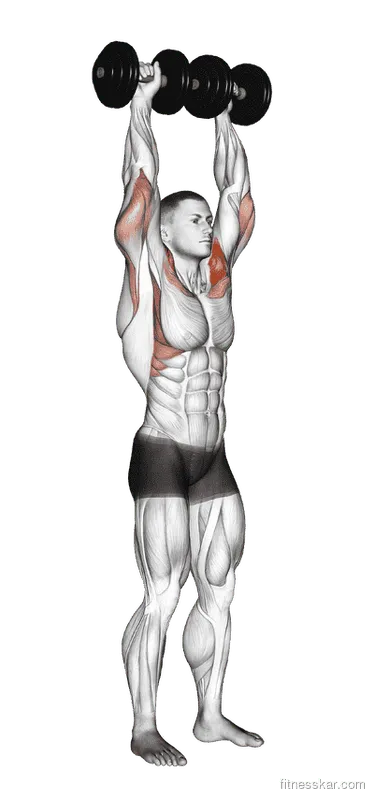
2 Dumbbell Standing Overhead Press - Sets
- 3
- Reps
- 8–10
- Rest
- 90 s
-
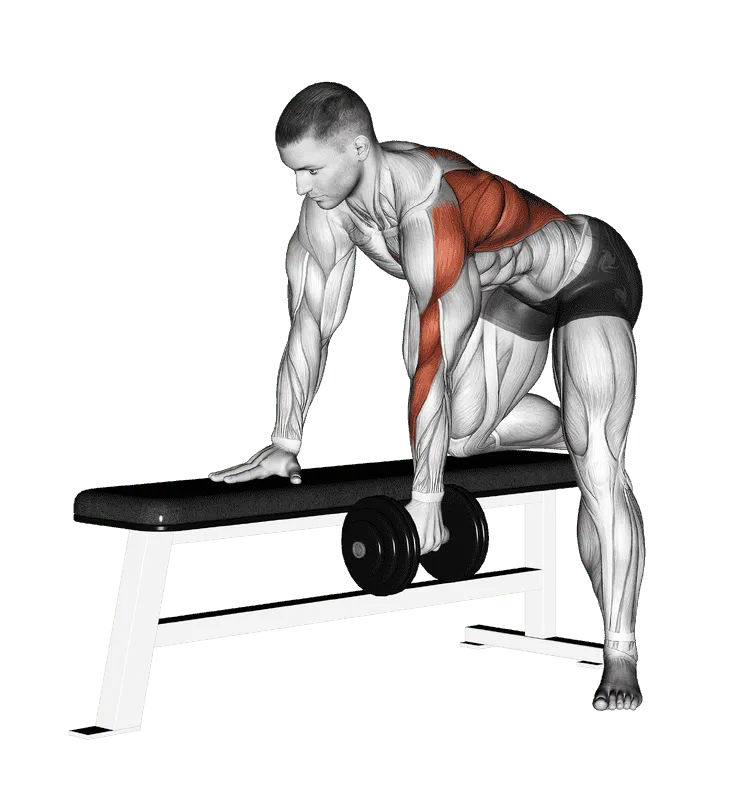
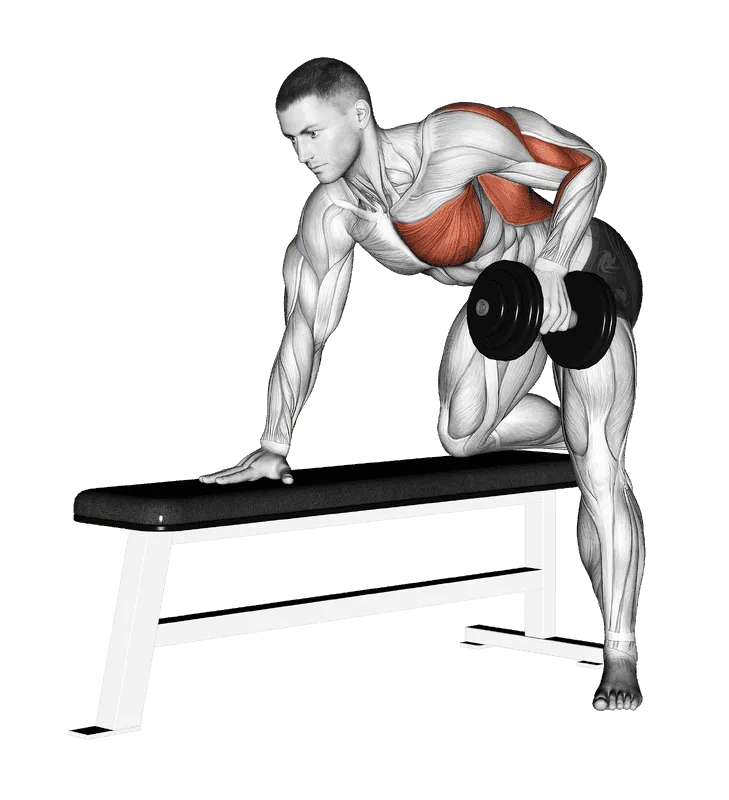
3 Dumbbell Bent-Over Row - Sets
- 3
- Reps
- 8–12
- Rest
- 90 s
-
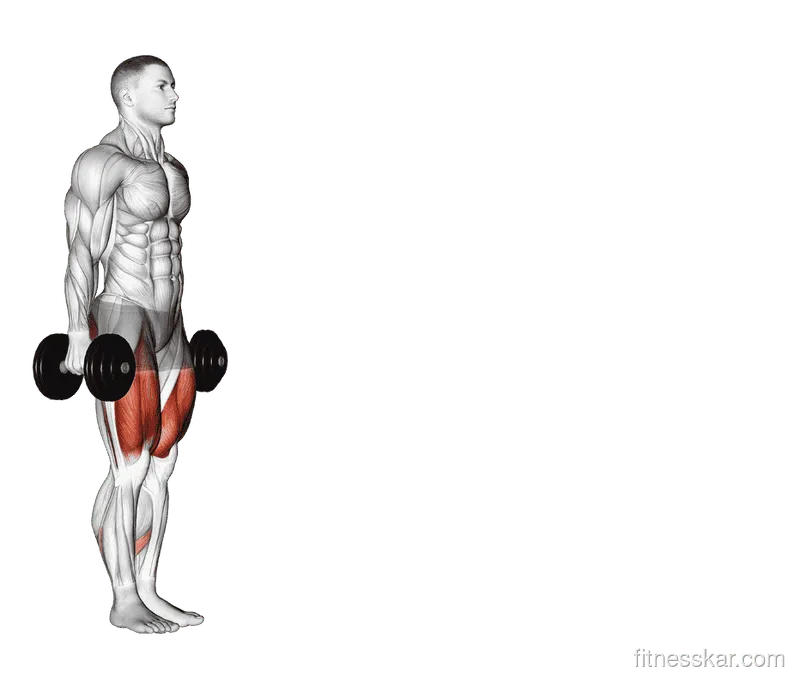
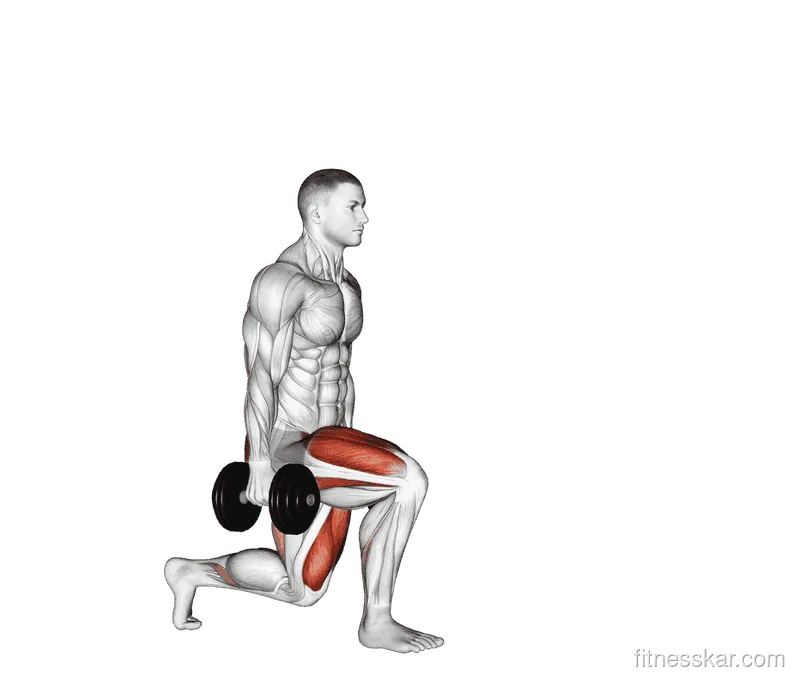
4 Dumbbell Walking Lunges - Sets
- 3
- Reps
- 10–12
- Rest
- 90 s
-
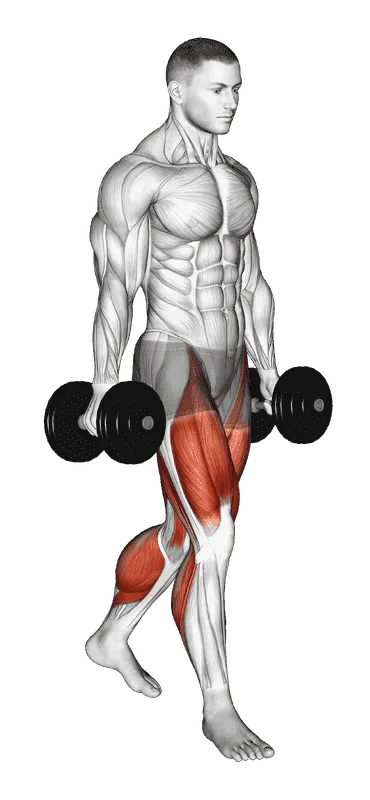
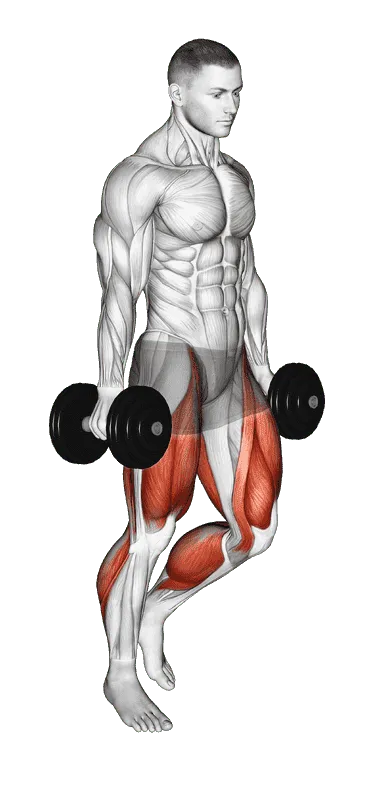
5 Farmer's Walk - Sets
- 3
- Rest
- 60 s
- Duration
- 30–40 s
How to progress: use double progression. When you hit the top of the rep range on every set with good form, add weight next time, about 2.5–5 kg on lower-body lifts and 1–2.5 kg on upper-body lifts. Stop most sets with one to three reps left in the tank. For why heavy loads matter so much in a diet, read how to lose fat without losing muscle.
Part 2: Cardio, two sessions a week
Cardio adds to your deficit and improves your fitness. Use one steady session and one interval session. In meta-analyses, the two types produce similar fat loss,[3] and mixing them gives you both the volume and the fitness boost. Our comparison of HIIT and steady-state cardio explains why.
Cardio sessions
-
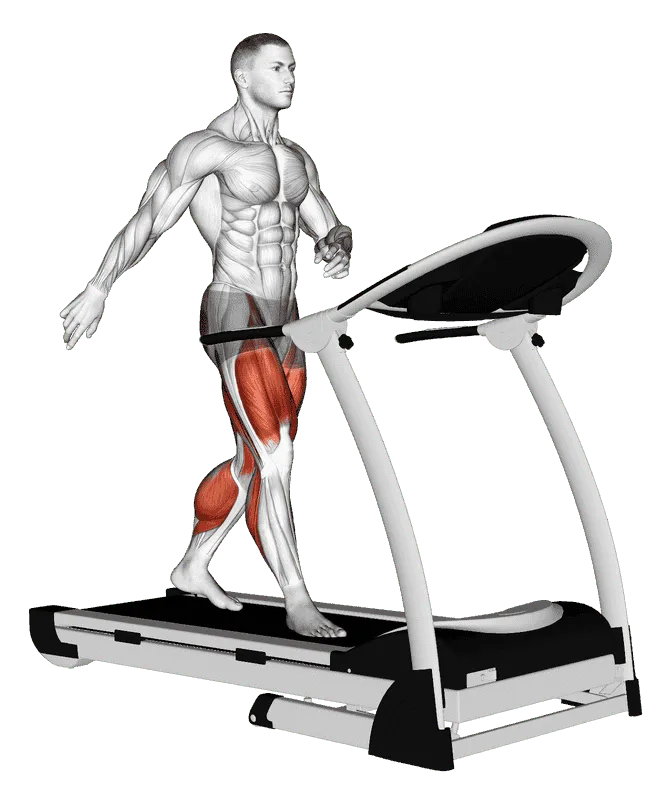
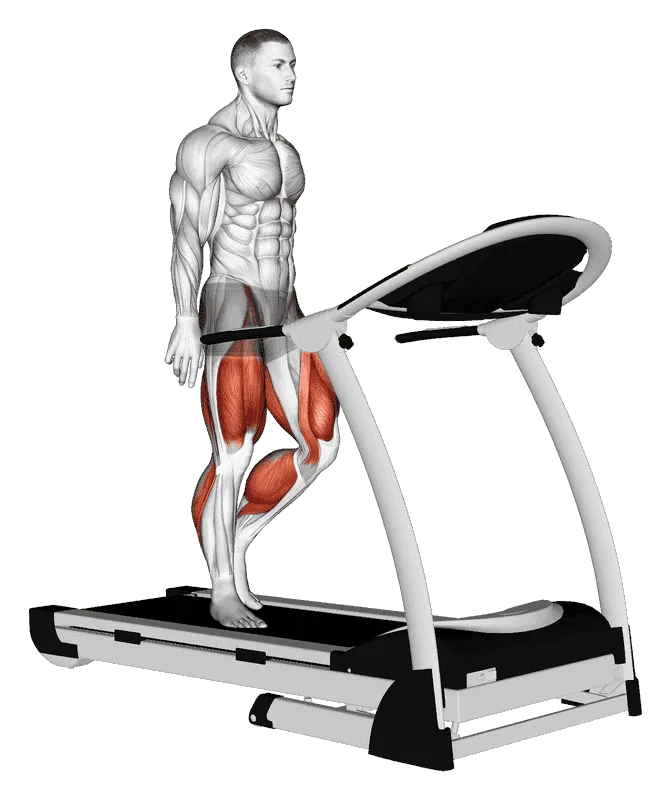
1 Walking on Treadmill - Duration
- 30–45 min
-
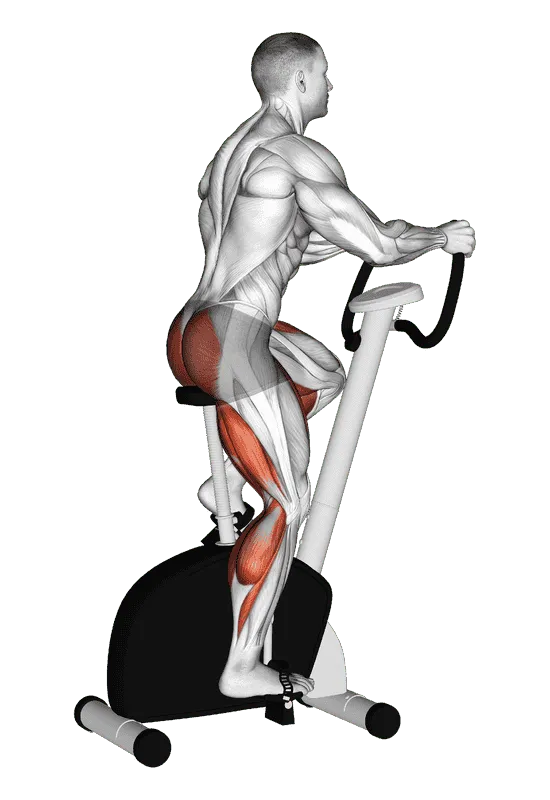
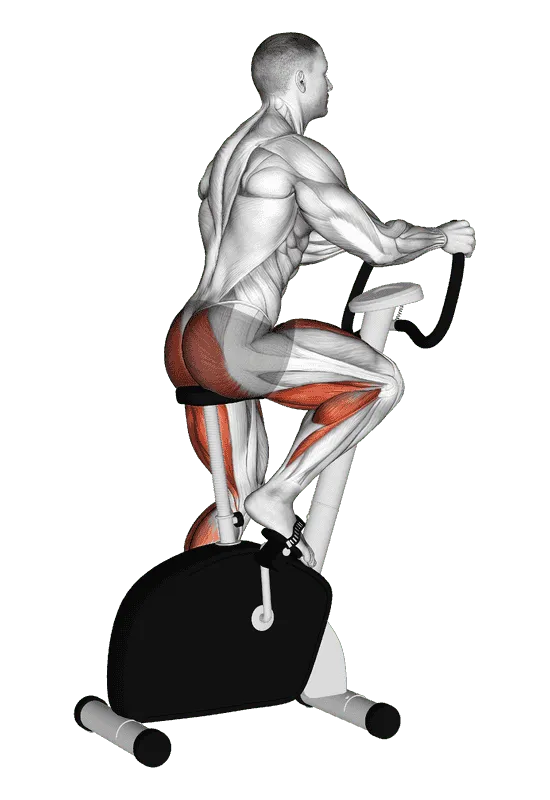
2 Stationary Bike - Duration
- 25 min
-

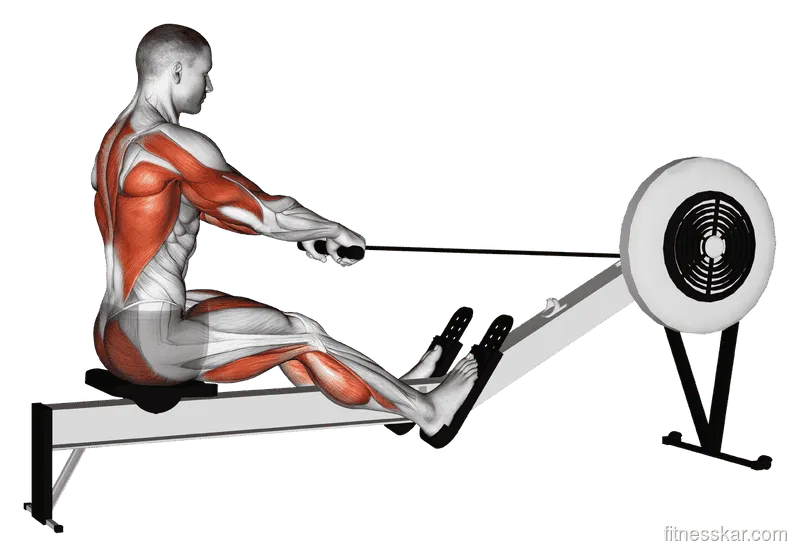
3 Rowing (with rowing machine) - Duration
- 24 min
-
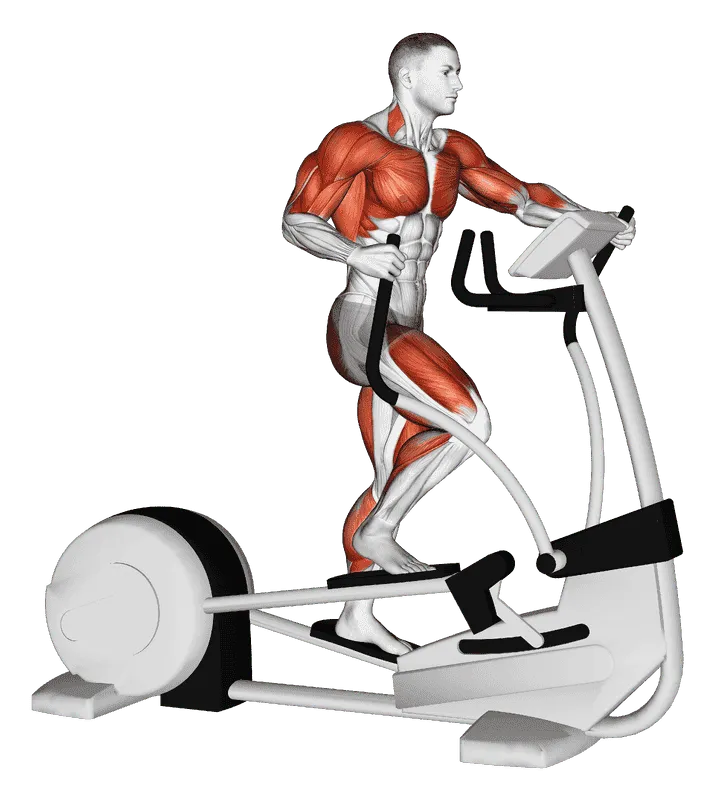
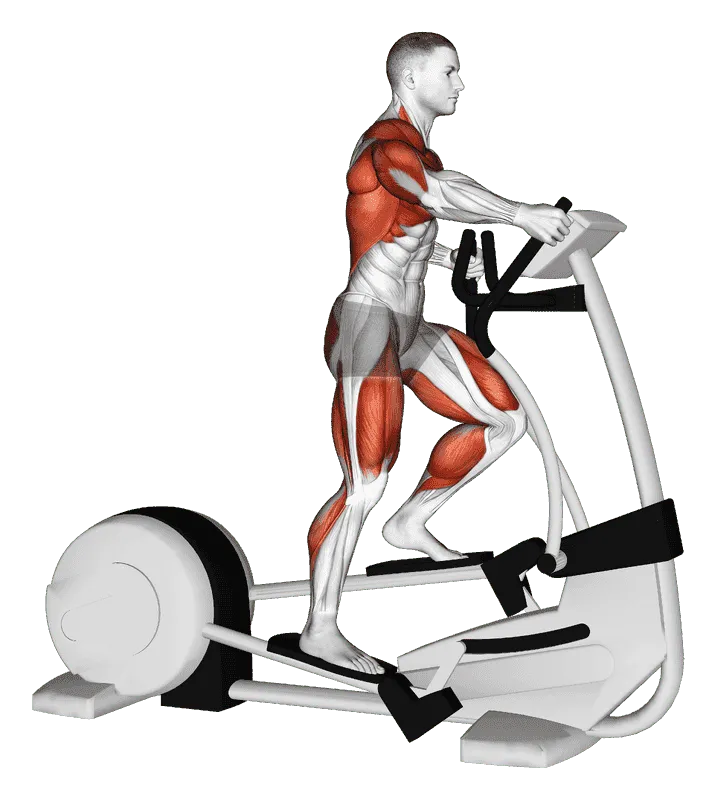
4 Elliptical Cross Trainer - Duration
- 30–45 min
Keep cardio from eating into your lifting. A meta-analysis of combined training found that running, but not cycling, significantly reduced gains in muscle size and strength, and that more frequent and longer endurance sessions interfered more.[4] So do your intervals on a bike or a rower, keep them off your heavy lower-body days, and don't let cardio sessions creep up to an hour.
Part 3: Daily steps
Formal workouts are only part of the energy you burn. In a classic overfeeding study, people ate 1,000 extra calories a day for eight weeks. Two-thirds of the increase in their daily energy expenditure came from non-exercise activity such as moving around, standing and fidgeting, and differences in that activity explained a ten-fold difference in how much fat they gained.[5]
Steps are also good for your long-term health. In a meta-analysis of 15 studies and more than 47,000 adults, the risk of death kept falling as daily steps rose, levelling off at about 6,000–8,000 steps for adults aged 60 and over and 8,000–10,000 steps for younger adults.[6]
- Check your current daily average on your phone.
- Add about 1,000 steps a day each week until you reach 7,000–10,000.
- Build walking into your routine: after meals, during phone calls, or by getting off the bus a stop early.
Rest days and recovery
Rest days are part of the plan, not a break from it. Your body adapts between sessions, and recovery can feel harder when you're eating less. Keep at least one full rest day a week and make the other easy movement only, such as a relaxed walk. Protect your sleep, keep eating your protein on rest days too, and if you feel run down, swap a hard session for an easy one rather than grinding through it.
How much exercise is enough?
According to the American College of Sports Medicine, 150–250 minutes a week of moderate activity produces only modest weight loss, while more than 250 minutes a week is associated with clinically significant weight loss. Exercise also works better alongside a moderate calorie cut than a severe one.[7] The WHO's baseline for health is 150–300 minutes of moderate or 75–150 minutes of vigorous activity a week, plus strength training on at least two days.[1]
This plan gives you about 2.5 hours of lifting and 1 hour of cardio a week. Add a brisk 30-minute walk on most days and your cardio and walking come to roughly 240 minutes a week before you count a single lifting session.
Prefer a ready-made routine?
If you'd rather follow a structured program in the app, these two free fat-loss routines fit the approach above. Pair either one with the cardio and daily steps from this plan.
A 12-week progression
| Weeks | Strength | Cardio | Steps a day |
|---|---|---|---|
| 1–4 | 2 sets per exercise; learn the technique and leave about 3 reps in reserve | 1 steady session of 30 minutes and 1 interval session of 6 rounds | Your baseline plus 1,000 |
| 5–8 | 3 sets per exercise; add weight when you reach the top of the rep range | Steady 40 minutes; intervals 8 rounds | 7,000–8,000 |
| 9–12 | 3 sets; keep adding weight or reps | Steady 45 minutes; intervals 8–10 rounds | 8,000–10,000 |
If you miss a week, don't try to make it up. Just pick the plan back up where you left off.
Adjust the plan to fit you
The structure above suits most people, but it should bend to your schedule and experience:
- Only three days to train? Keep the three strength sessions, finish two of them with 10–15 minutes of bike or rower intervals, and walk every day.
- New to lifting? Start with two sets per exercise and light loads. Swap the barbell squat for the dumbbell goblet squat and the barbell bench press for the dumbbell bench press until the movements feel natural.
- New to exercise, or inactive for a while? Do a second steady session instead of intervals for the first four weeks, and add the interval day once the steady sessions feel easy. If you have a heart, metabolic or kidney condition, or symptoms such as chest pain or unusual breathlessness, check with your doctor before you start.
- Heavier, or have sore knees? Choose the bike, the elliptical or incline walking for cardio, and skip jumping moves entirely.
- Already fit and lifting? Keep your current strength program and slot the cardio sessions and daily steps around it, rather than starting over.
Signs you need to adjust
Training should leave you tired but recovering from week to week. Pull back, usually by dropping the interval session or one set per exercise for a week, if you notice:
- your main lifts going down for two weeks in a row
- soreness that hasn't faded by your next session
- worse sleep, or dreading your workouts
- nagging joint pain (and see a professional if it lasts)
If your energy is fine but your weight hasn't moved in two to three weeks, the fix is usually in your diet rather than more training.
Frequently asked questions
How many days a week should I work out to lose fat?
Five is a good target: three strength sessions and two cardio sessions, plus daily walking. If that's too much to start, two strength sessions and daily walks are a solid minimum.
Should I do cardio or weights first?
If you do both on the same day, lift first so your heavy sets get your best energy. Better still, keep hard cardio on separate days.
Can I follow this plan at home?
Yes. Swap the barbell lifts for dumbbell versions, or follow the bodyweight routine above, and walk or cycle outdoors for your cardio.
How soon will I see results?
That depends mostly on your diet. At a steady 0.5 kg a week, 12 weeks adds up to about 6 kg. Track your waist and your lifts along with the scale so you can see progress from more than one angle.
Sources
- Bull FC, Al-Ansari SS, Biddle S, et al. World Health Organization 2020 guidelines on physical activity and sedentary behaviour. British Journal of Sports Medicine. 2020. pubmed.ncbi.nlm.nih.gov/33239350/ ↩
- Villareal DT, Aguirre L, Gurney AB, et al. Aerobic or resistance exercise, or both, in dieting obese older adults. New England Journal of Medicine. 2017. pubmed.ncbi.nlm.nih.gov/28514618/ ↩
- Wewege M, van den Berg R, Ward RE, Keech A. The effects of high-intensity interval training vs. moderate-intensity continuous training on body composition in overweight and obese adults: a systematic review and meta-analysis. Obesity Reviews. 2017. pubmed.ncbi.nlm.nih.gov/28401638/ ↩
- Wilson JM, Marin PJ, Rhea MR, et al. Concurrent training: a meta-analysis examining interference of aerobic and resistance exercises. Journal of Strength and Conditioning Research. 2012. pubmed.ncbi.nlm.nih.gov/22002517/ ↩
- Levine JA, Eberhardt NL, Jensen MD. Role of nonexercise activity thermogenesis in resistance to fat gain in humans. Science. 1999. pubmed.ncbi.nlm.nih.gov/9880251/ ↩
- Paluch AE, Bajpai S, Bassett DR, et al. Daily steps and all-cause mortality: a meta-analysis of 15 international cohorts. Lancet Public Health. 2022. pubmed.ncbi.nlm.nih.gov/35247352/ ↩
- Donnelly JE, Blair SN, Jakicic JM, et al. American College of Sports Medicine position stand: appropriate physical activity intervention strategies for weight loss and prevention of weight regain for adults. Medicine & Science in Sports & Exercise. 2009. pubmed.ncbi.nlm.nih.gov/19127177/ ↩