Big, strong legs take more than squats. Squats build your quads, glutes and inner thighs, but research shows they do little for your hamstrings or for the quad muscle that crosses the hip. A complete leg program combines a squat pattern, a hip hinge, single-leg work and a few machine exercises that fill the gaps.
Here are the nine leg exercises we would build a program around, with the sets, reps and cues for each, and a two-day plan that trains every muscle in your legs.
Your leg muscles and what trains them
| Muscle | Main job | Best exercises |
|---|---|---|
| Quadriceps (front of the thigh) | Straighten the knee; the rectus femoris also lifts the thigh | Squats, leg presses, split squats, leg extensions |
| Hamstrings (back of the thigh) | Bend the knee and extend the hip | Romanian deadlifts, leg curls |
| Glutes | Extend and stabilize the hip | Deep squats, hip thrusts, split squats, Romanian deadlifts |
| Adductors (inner thigh) | Pull the thigh inward and help extend the hip | Deep squats, split squats |
| Calves | Point the foot | Standing and seated calf raises |
The 9 best leg exercises
Pick four or five of these per session; the two-day plan further down shows how to combine them.
-
1 Barbell Full Squat - Sets
- 3–4
- Reps
- 5–8
- Rest
- 180 s
-
2 Barbell Romanian Deadlift - Sets
- 3
- Reps
- 6–10
- Rest
- 150 s
-

3 Sled 45° Leg Press - Sets
- 3
- Reps
- 10–15
- Rest
- 120 s
-

4 Dumbbell Bulgarian Split Squat - Sets
- 2–3
- Reps
- 8–12
- Rest
- 90 s
-
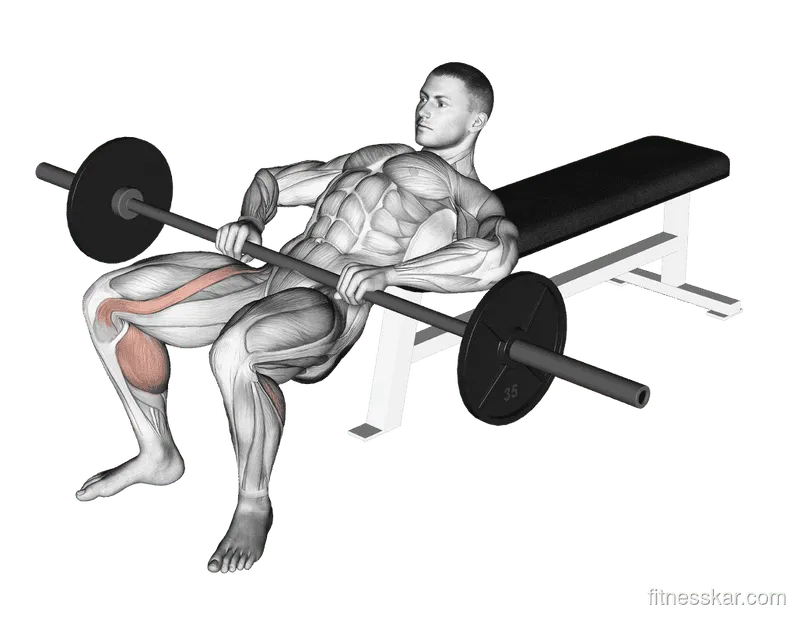
5 Barbell Hip Thrust - Sets
- 3
- Reps
- 8–12
- Rest
- 120 s
-
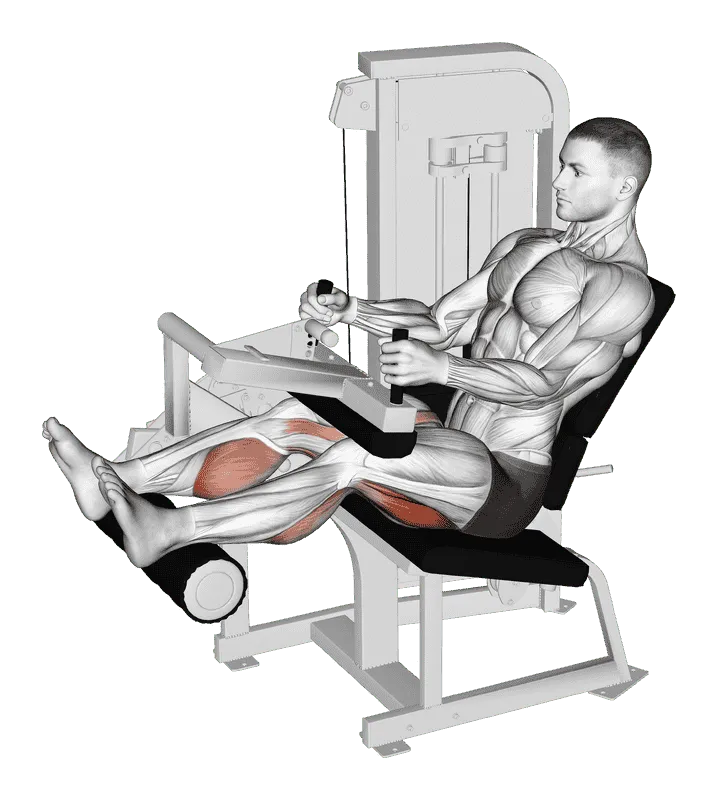
6 Lever Seated Leg Curl - Sets
- 3
- Reps
- 10–15
- Rest
- 90 s
-
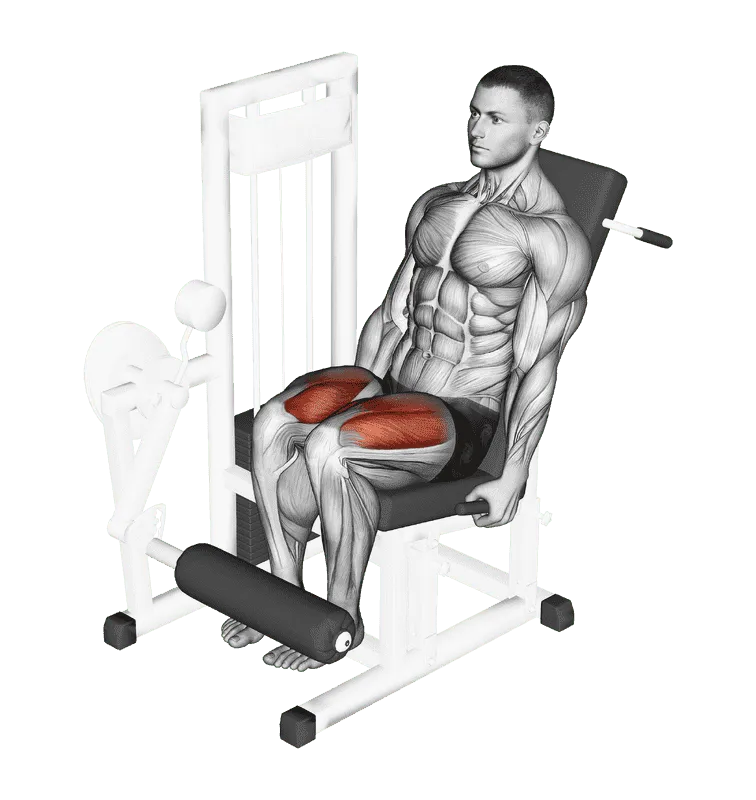
7 Lever Leg Extension - Sets
- 2–3
- Reps
- 10–15
- Rest
- 90 s
-
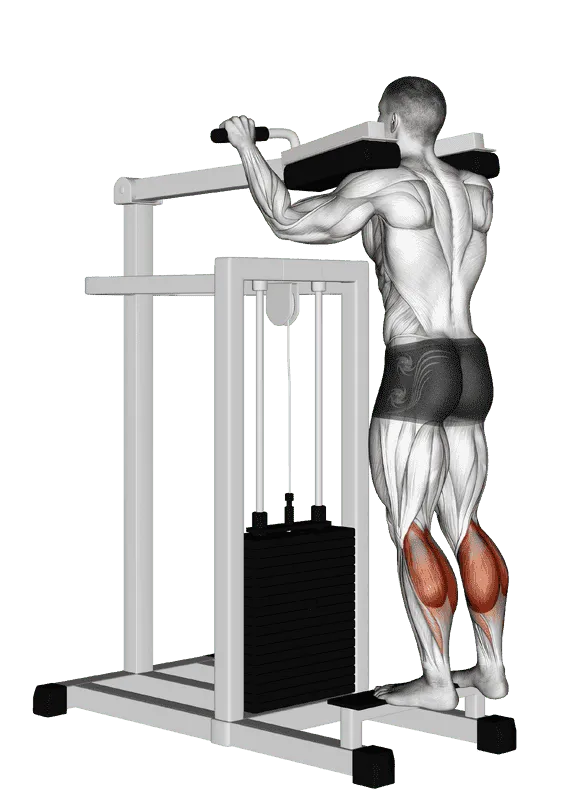
8 Lever Standing Calf Raise - Sets
- 3–4
- Reps
- 10–15
- Rest
- 60 s
-
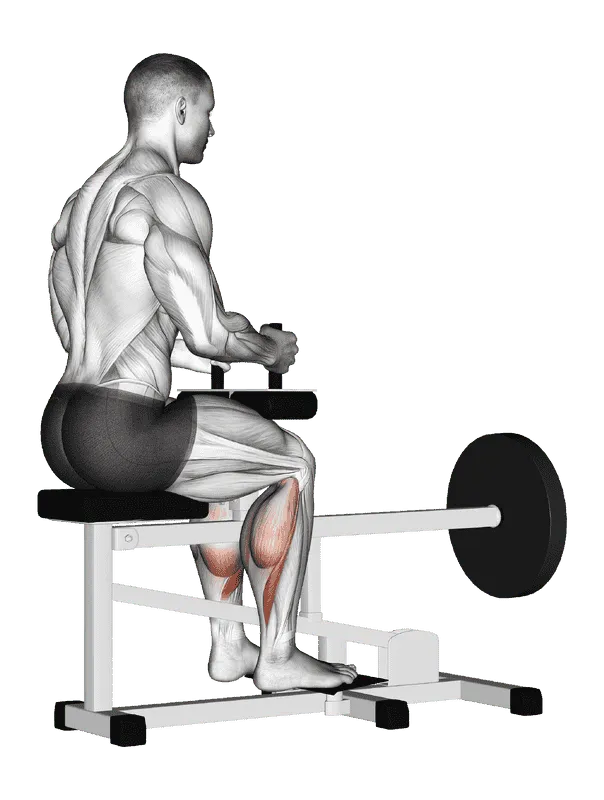
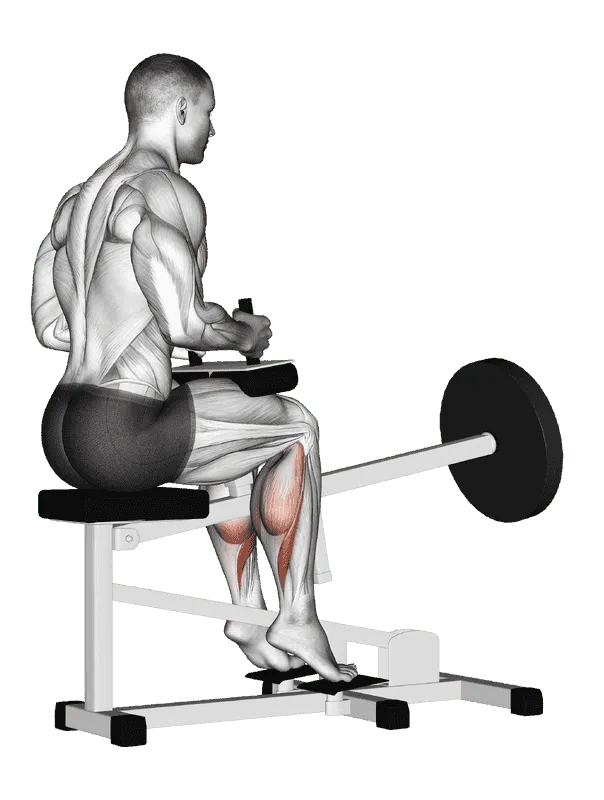
9 Lever Seated Calf Raise (Plate-Loaded) - Sets
- 3
- Reps
- 12–20
- Rest
- 60 s
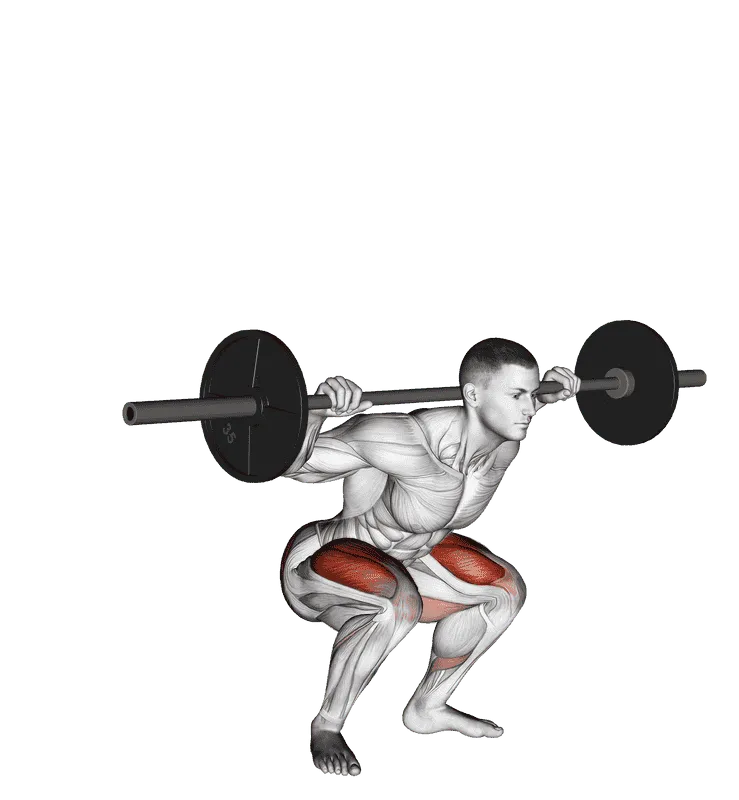

1. Barbell squat
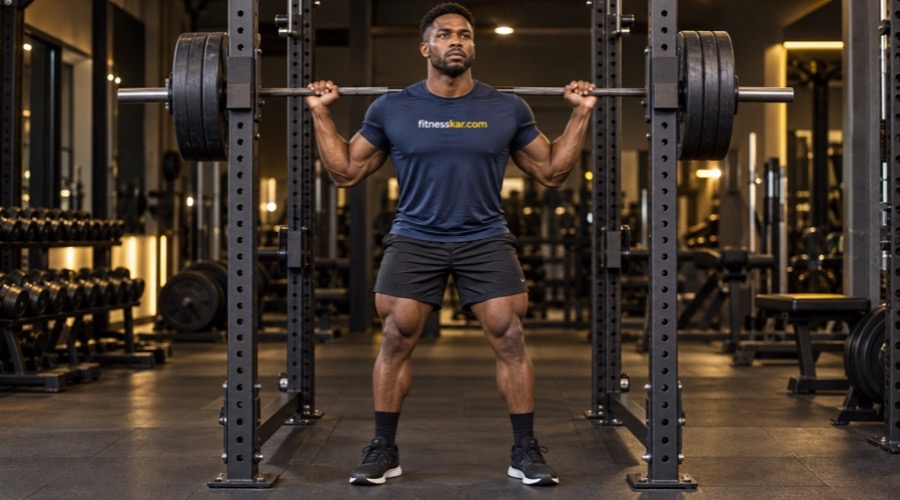
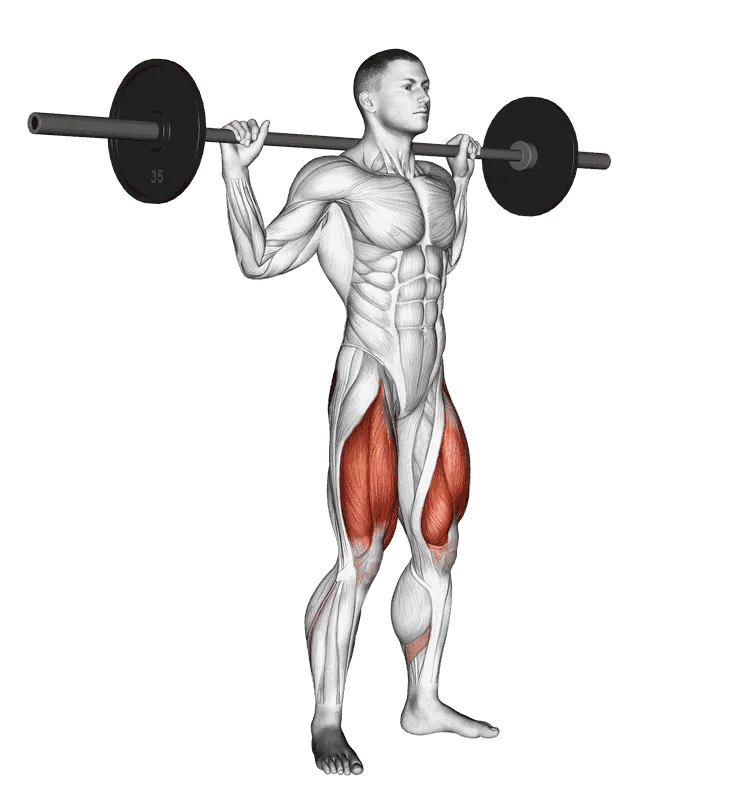
The barbell full squat is one of the best single exercises for your quads, glutes and adductors, and depth matters. In a 10-week study, full squats and half squats built the quads about equally, but full squats grew the glutes and adductors two to three times as much: about 6.7 and 6.2 percent, versus about 2.2 and 2.7 percent with half squats. Neither version grew the hamstrings.[1]
- Set the bar on your upper back and brace your abs before every rep.
- Sit down between your hips, with your knees tracking over your toes.
- Go as deep as you can while your back stays neutral, ideally with your hips below your knees.
- Drive up through your whole foot.
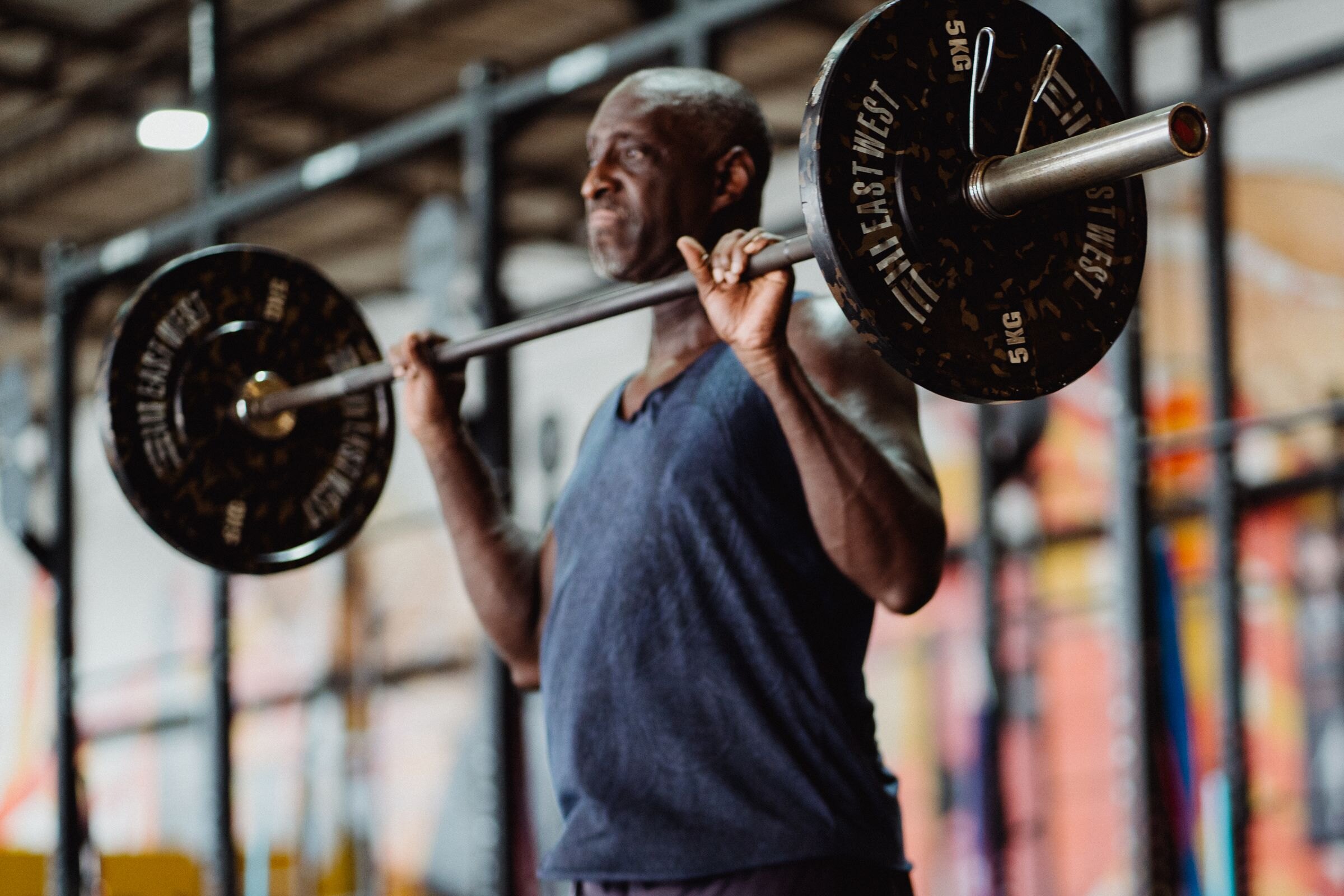
If back squats don't suit you, the barbell front squat or the dumbbell goblet squat trains the same pattern. For a step-by-step technique guide, read how to squat.
2. Romanian deadlift
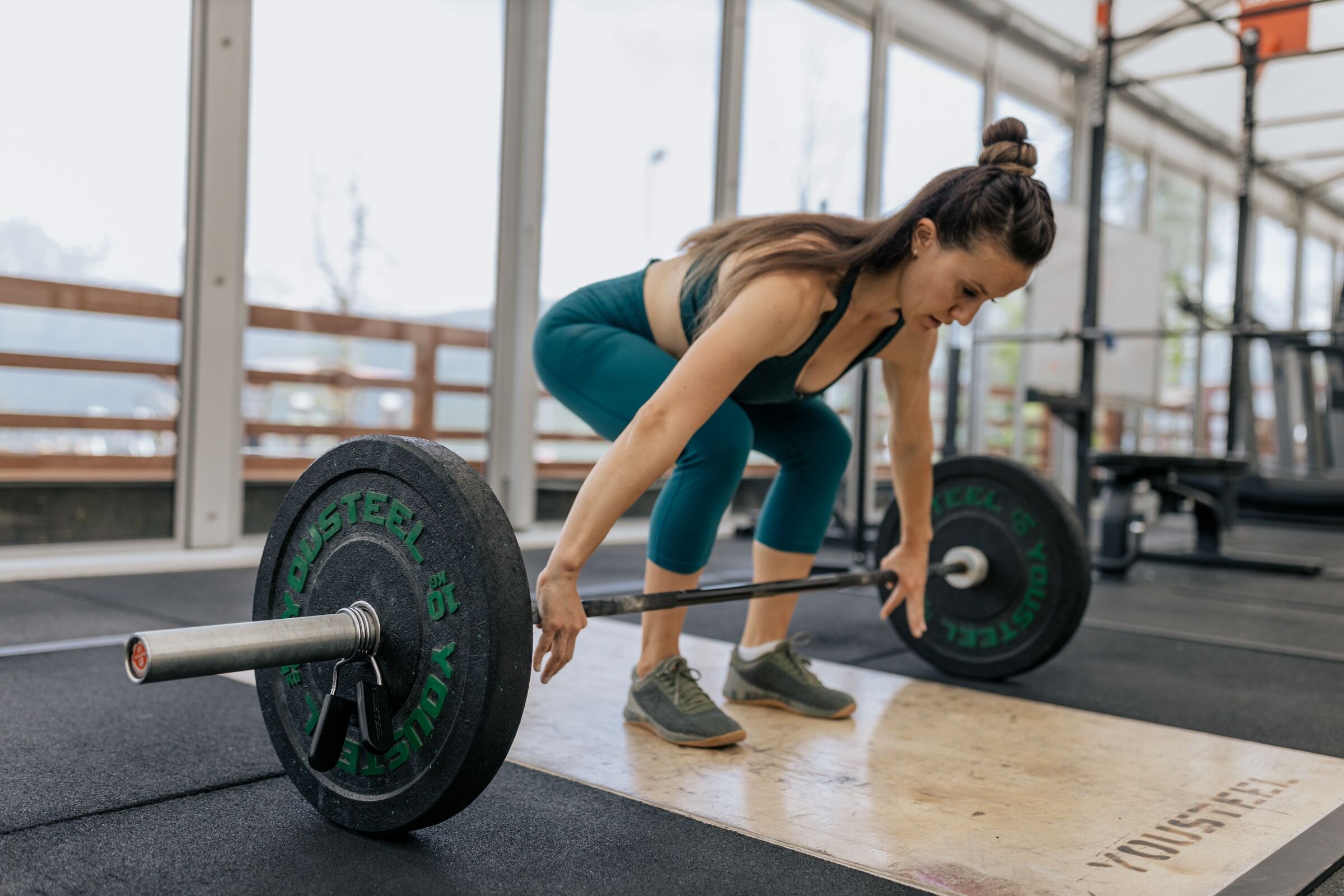
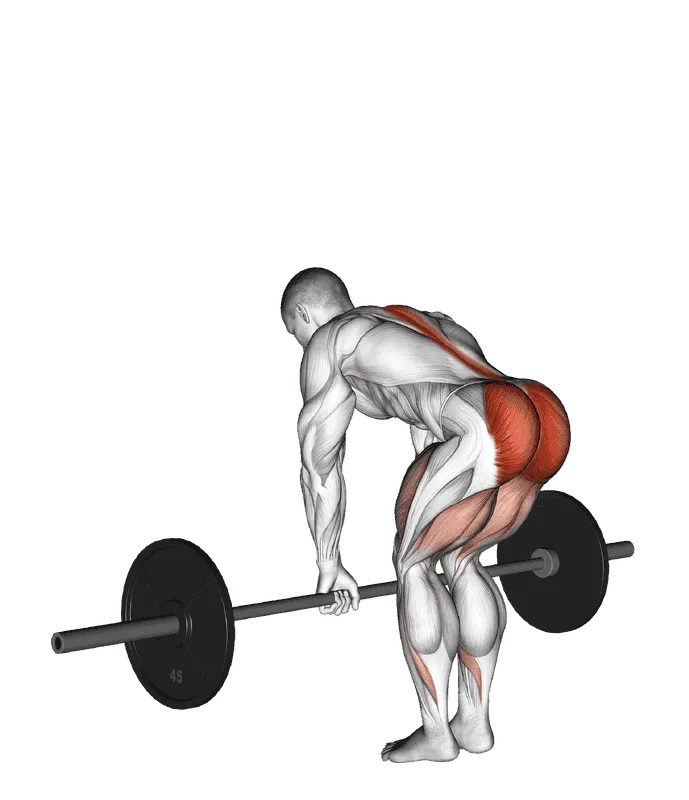
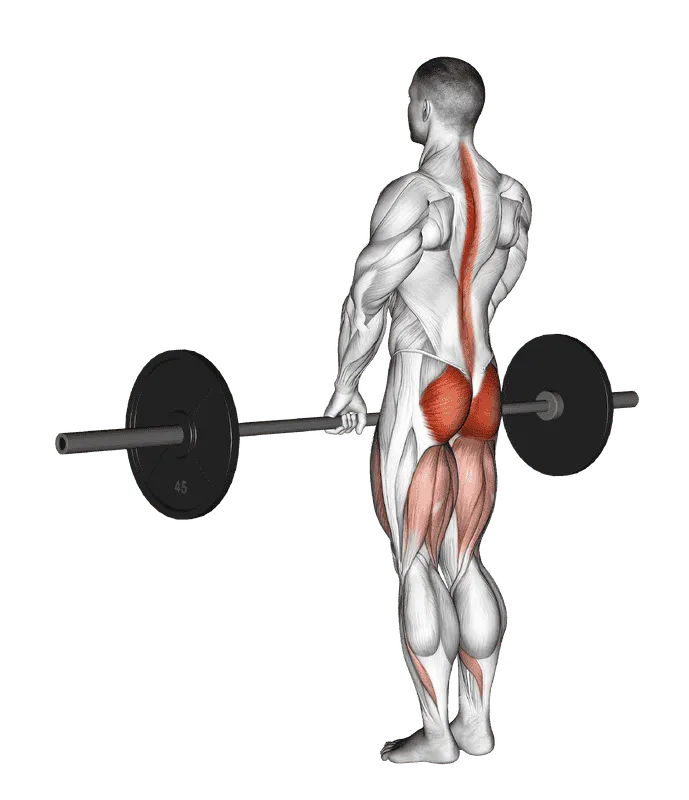
The barbell Romanian deadlift is a hip hinge that loads your hamstrings and glutes in a deep stretch, which is exactly what squats miss.
- Hold the bar at hip height with a shoulder-width grip.
- Push your hips back with a slight knee bend, sliding the bar down your thighs.
- Lower until you feel a strong hamstring stretch, usually around knee level or just below, with a flat back.
- Drive your hips forward to stand up.
The conventional barbell deadlift also trains your whole posterior chain; our guide on how to deadlift covers it in detail.
3. Leg press
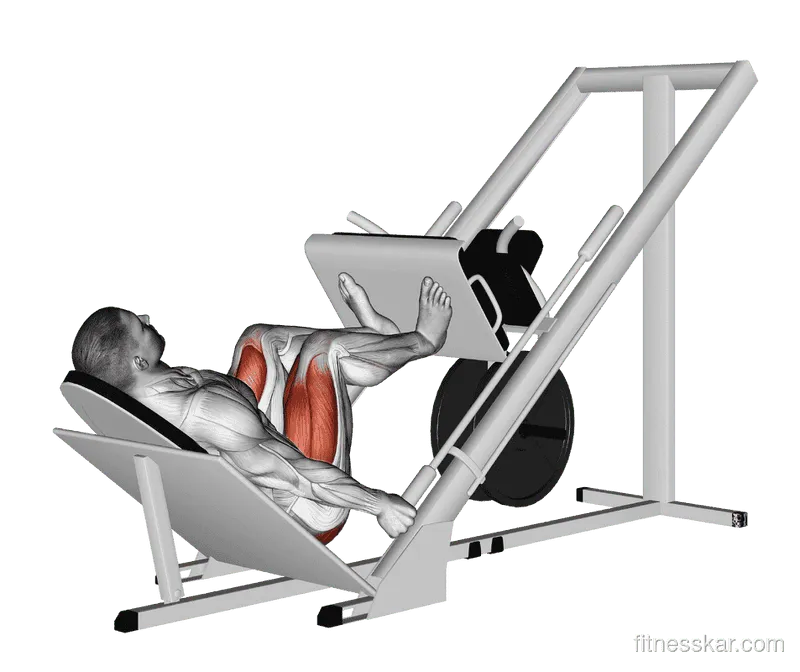
The sled 45° leg press lets you load your quads heavily without balancing a bar on your back, so you can take sets close to failure safely. It's an ideal second quad exercise after squats, or a main lift if squats don't suit you. The sled hack squat is another good option.
- Place your feet shoulder-width apart in the middle of the platform.
- Lower the sled until your knees are deeply bent, without letting your lower back peel off the pad.
- Press through your whole foot and stop just short of locking your knees.
4. Bulgarian split squat
The dumbbell Bulgarian split squat trains one leg at a time with your rear foot on a bench. It builds the quads, glutes and adductors, evens out side-to-side differences and needs only light weights, so it works at home too.
- Stand about a stride in front of a bench with the top of your rear foot on it.
- Lower straight down until your rear knee nearly touches the floor.
- A slight forward lean shifts more work to your glutes; a more upright torso favors your quads.
5. Hip thrust
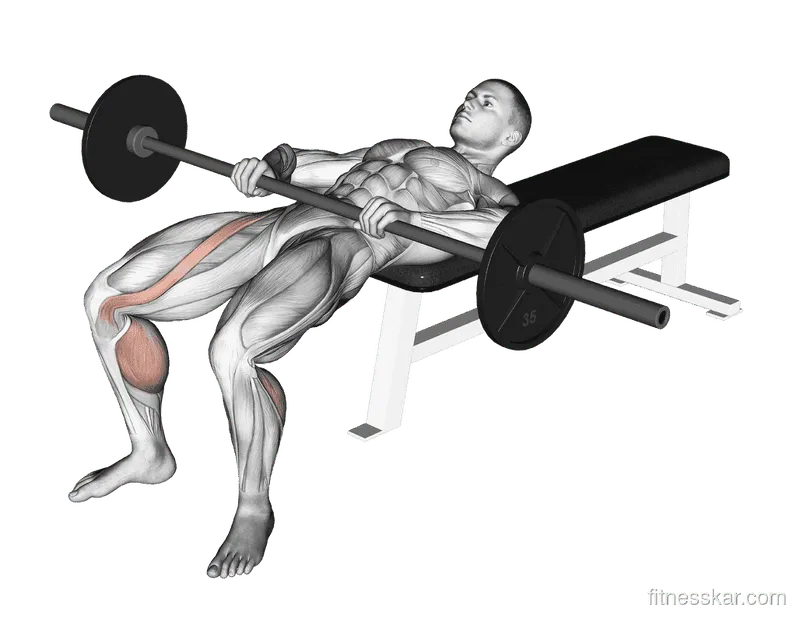
The barbell hip thrust loads your glutes hardest at the top, when they're fully contracted. In a nine-week study of untrained adults, hip thrusts and back squats built similar amounts of glute muscle, while the squats also grew the quads and adductors more.[2] Use hip thrusts alongside squats, not instead of them.
- Sit with your upper back against a bench and a padded bar across your hips.
- Drive through your heels until your hips are fully extended and your body is flat from shoulders to knees.
- Keep your chin tucked and your ribs down, and don't arch your lower back at the top.
6. Seated leg curl
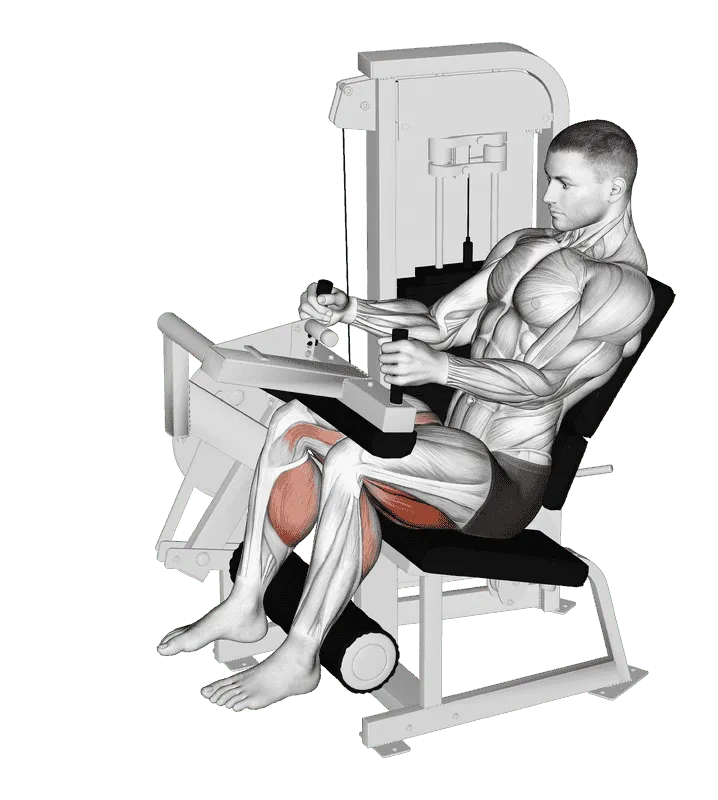
Your hamstrings need direct knee-bending work, and the seated version wins. In a 12-week study, seated leg curls built more hamstring muscle than lying leg curls, most likely because sitting trains the hamstrings at longer muscle lengths.[3] Make the lever seated leg curl your default; the lever lying leg curl is still useful when that's what your gym has.
- Line your knees up with the machine's pivot point.
- Curl your heels down and back as far as you can.
- Return slowly until your legs are nearly straight.
7. Leg extension
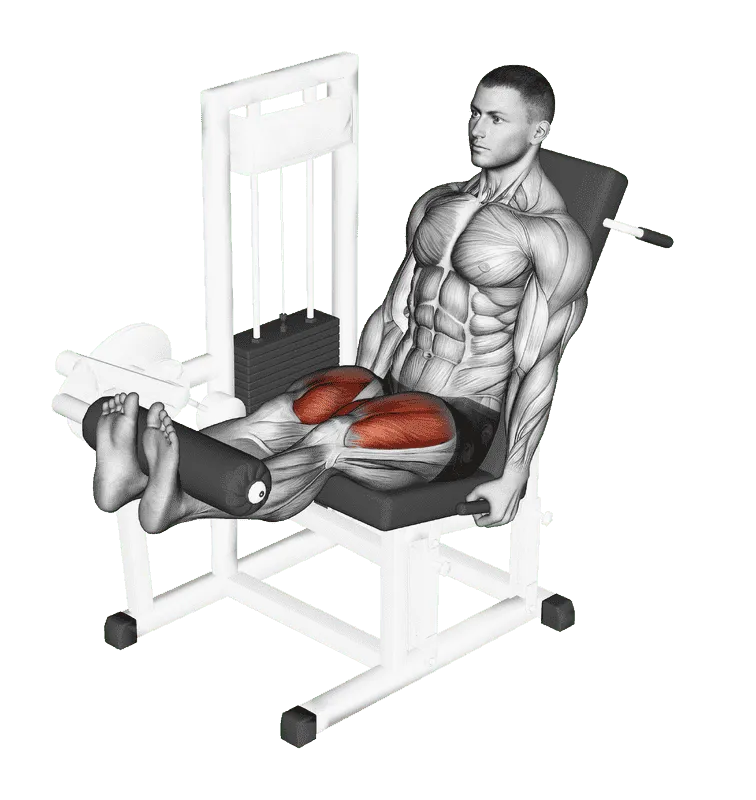
The rectus femoris, the one quad muscle that crosses both the hip and the knee, gets relatively little work from squats and presses. In one study it was significantly more active during knee extensions than during the leg press, while the other quad muscles worked similarly in both,[4] and it didn't grow at all with squat training in the depth study above. The lever leg extension fills that gap.
- Line your knees up with the machine's pivot and sit all the way back in the seat.
- Straighten your knees fully and squeeze your quads for a second.
- Lower under control without letting the weight stack slam.
8. Standing calf raise
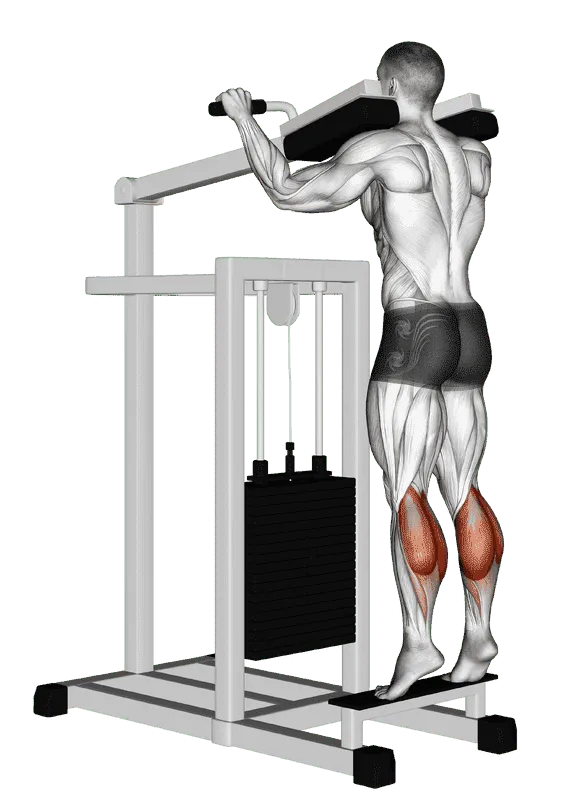
The lever standing calf raise trains the gastrocnemius, the two-headed muscle that forms the visible bulge of your calf, which works best with your knees straight. The stretch is the key: in an eight-week study, women who trained only the bottom, stretched half of the calf raise grew their medial gastrocnemius more than twice as much as those who used the full range (15.2 versus 6.7 percent).[5]
- Stand with the balls of your feet on the edge of the platform.
- Lower your heels as far as you can and pause for a second in the stretch.
- Rise onto your toes without bouncing, and never skip the bottom half of the rep.
9. Seated calf raise
With your knees bent, the gastrocnemius goes slack and the soleus underneath does more of the work. The lever seated calf raise targets it directly. Use higher reps and the same slow, deep stretch.
- Set the pad snugly just above your knees.
- Lower your heels as far as you can, pause, then press up onto your toes.
A two-day leg plan
Train your legs twice a week, with one squat-focused and one hinge-focused session, and add a little weight or a rep whenever you can. Our guide to progressive overload explains how to keep that going for months.
| Muscle | Day A: squat focus | Day B: hinge and single-leg focus |
|---|---|---|
| Quads | Barbell squat 3-4 × 5-8, leg extension 2-3 × 10-15 | Leg press 3 × 10-15, Bulgarian split squat 2-3 × 8-12 per leg |
| Hamstrings and glutes | Romanian deadlift 3 × 6-10 | Seated leg curl 3 × 10-15, hip thrust 3 × 8-12 |
| Calves | Standing calf raise 3-4 × 10-15 | Seated calf raise 3 × 12-20 |
Beginners can start with three or four exercises per day, such as a squat, a Romanian deadlift, a leg curl and a calf raise, and add the rest as they adapt. You can also browse every upper-leg exercise in the library.
Experienced lifters who want a dedicated leg block can try this premium six-week plan with two leg sessions a week.
Common leg-training mistakes
- Half squats. Stopping high costs you glute and adductor growth. Squat as deep as your mobility allows with a neutral spine.
- No hamstring-specific work. Squats don't grow the hamstrings, so you need hinges and leg curls.
- Bouncing calf raises. Using your Achilles tendon like a spring skips the stretch, the most productive part of the rep.
- Knees caving in. Keep your knees in line with your toes on squats, leg presses and split squats.
- Rounding on Romanian deadlifts. Go only as low as you can with a flat back.
- One leg day a week. Two sessions a week let you do more quality work with less soreness the next day.
Frequently asked questions
Frequently asked questions
How many leg exercises should I do per workout?
Three to five: a main squat or hinge, one or two supporting exercises, and some calf work. Two leg sessions a week cover every muscle.
Do I have to squat to build big legs?
No. Leg presses, hack squats and split squats can all build big quads. Deep squats are simply very efficient because they also train your glutes and adductors.
Should I do seated or lying leg curls?
Seated leg curls built more hamstring muscle in a direct comparison, so make them your default. Lying curls are still a good second option.
Why won't my calves grow?
Usually because they're trained with short, bouncy reps and too few sets. Pause in the full stretch, train them two or three times a week, and use both straight-knee and bent-knee raises. Genetics also play a big role in calf size.
Are hip thrusts better than squats for the glutes?
In a nine-week study they built similar glute size, but squats also grew the quads and adductors. Squats cover more muscle; hip thrusts are a great addition.
Sources
- Kubo K, Ikebukuro T, Yata H. Effects of squat training with different depths on lower limb muscle volumes. European Journal of Applied Physiology. 2019. pubmed.ncbi.nlm.nih.gov/31230110/ ↩
- Plotkin DL, Rodas MA, Vigotsky AD, et al. Hip thrust and back squat training elicit similar gluteus muscle hypertrophy and transfer similarly to the deadlift. Frontiers in Physiology. 2023. pubmed.ncbi.nlm.nih.gov/37877099/ ↩
- Maeo S, Huang M, Wu Y, et al. Greater hamstrings muscle hypertrophy but similar damage protection after training at long versus short muscle lengths. Medicine and Science in Sports and Exercise. 2021. pubmed.ncbi.nlm.nih.gov/33009197/ ↩
- Ema R, Sakaguchi M, Akagi R, Kawakami Y. Unique activation of the quadriceps femoris during single- and multi-joint exercises. European Journal of Applied Physiology. 2016. pubmed.ncbi.nlm.nih.gov/27032805/ ↩
- Kassiano W, Costa B, Kunevaliki G, et al. Greater gastrocnemius muscle hypertrophy after partial range of motion training performed at long muscle lengths. Journal of Strength and Conditioning Research. 2023. pubmed.ncbi.nlm.nih.gov/37015016/ ↩